swiss logo photo
Dogs Against Mines: How Switzerland Supports Demining in Mykolaiv Region
Gulnara and Chali
[ region ]
Mykolaiv
10 / 09 / 2026
The deminer Gulnara and the Belgian Malinois Chali are demining as a team
[ topic ] Demining
Ukraine is often described as one of the world’s most heavily mine-contaminated countries, with around 132,000 square kilometres of territory considered potentially hazardous. Until such areas have been properly surveyed, they cannot be considered safe. Specially trained dogs, so-called mine detection dogs, are one of the tools used to help identify potentially dangerous areas.

Demining in the Mykolaiv region began after the first communities were liberated from Russian occupation in 2022. Since then, deminers have been surveying areas contaminated with mines and other explosive ordnance as a result of the Russian occupation and hostilities. Returning this land to safe use requires a range of methods. One of them is the use of specially trained dogs to detect explosive ordnance. Such teams are working in Mykolaiv region as part of a humanitarian demining project supported by Switzerland in partnership with APOPO and UDA.
Partnerships for the goals / 17
Life on land / 15
Good Health and well-being / 3
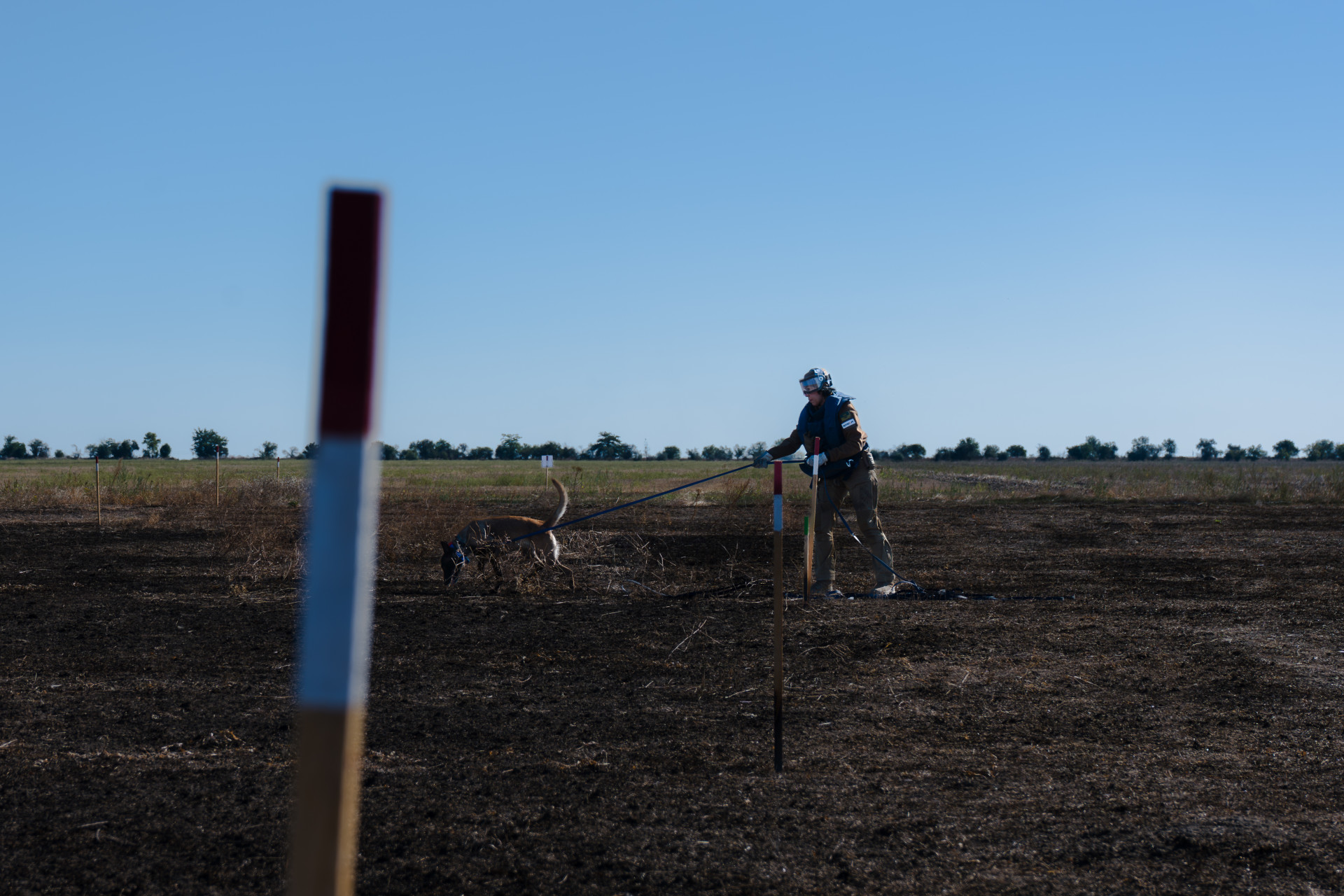
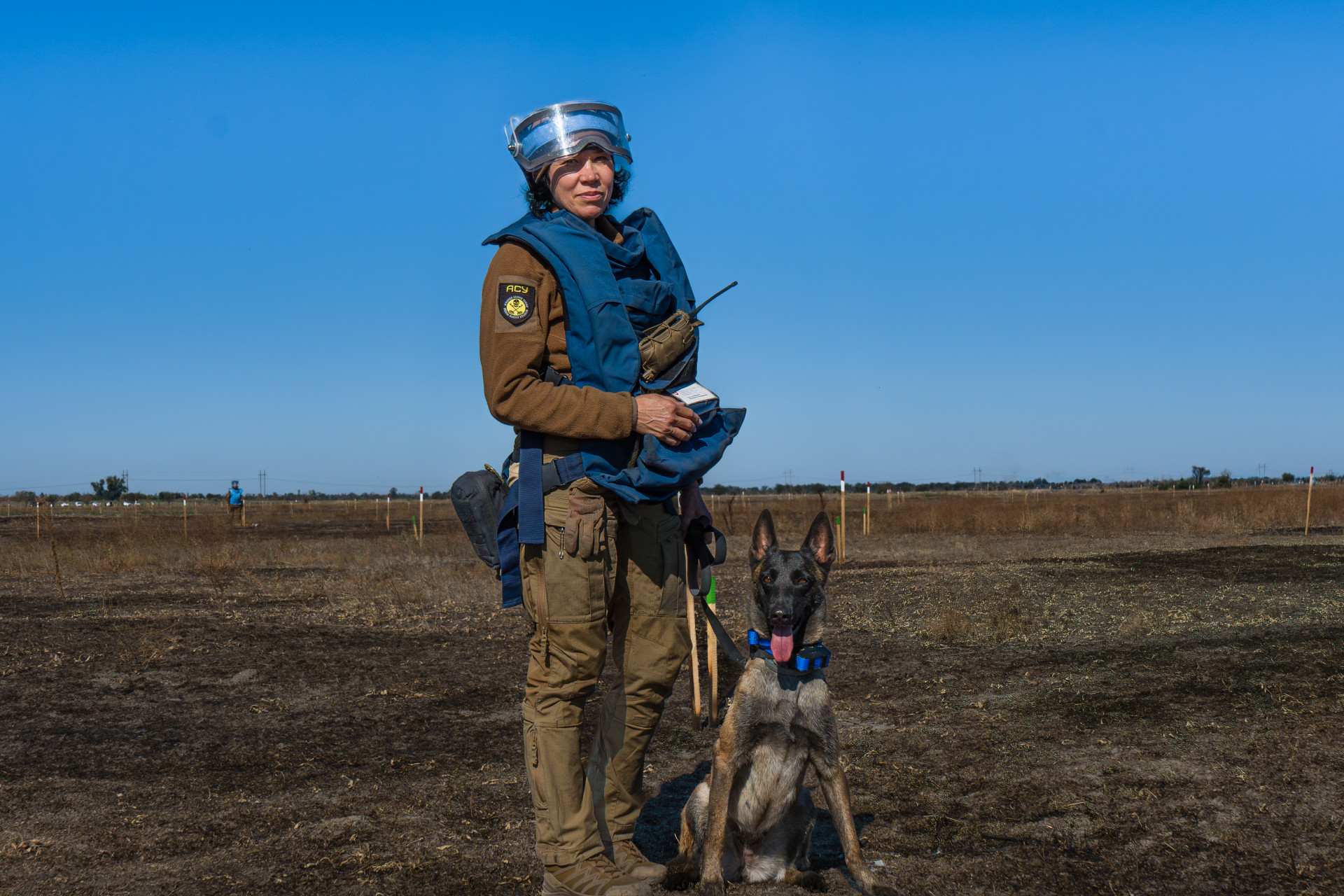
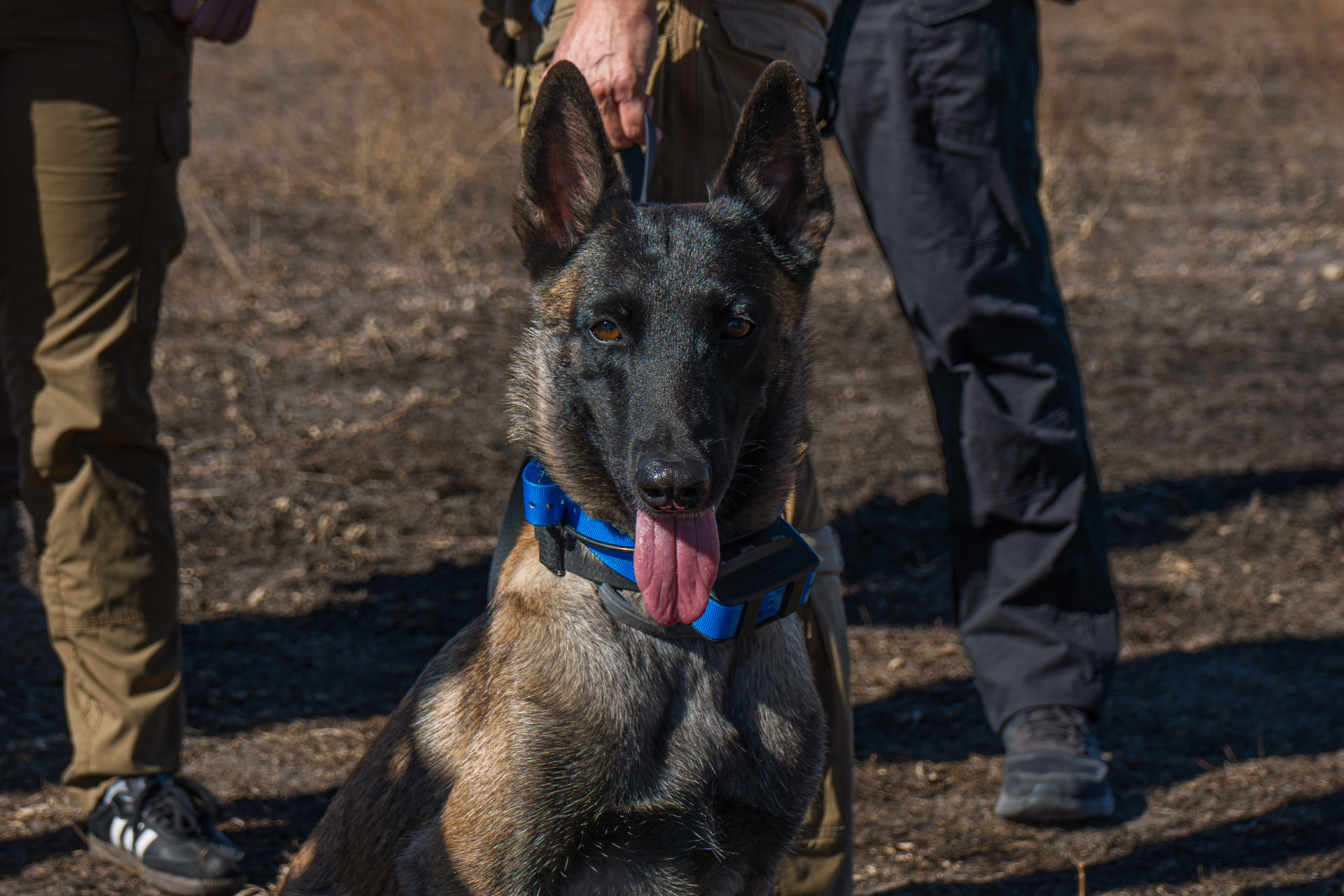
Chali, a Belgian Malinois, moves systematically across the field, guided by her handler, Gulnara. When she detects the scent she has been trained to recognise, she does not bark or dig. She simply sits down. For the deminers working nearby, this quiet signal marks an area that requires closer examination. 
 
Gulnara and Chali are part of a humanitarian demining project in Mykolaiv region supported by Switzerland and implemented with the international organisation APOPO and the Ukrainian Deminers Association (UDA). The specially trained dogs help teams identify potentially contaminated areas more quickly and return land to safe use. 
Demining in the Mykolaiv region began after the first communities were liberated from Russian occupation in 2022. Since then, deminers have been surveying areas contaminated with mines and other explosive ordnance as a result of the Russian occupation and hostilities. Returning this land to safe use requires a range of methods. One of them is the use of specially trained dogs to detect explosive ordnance. Such teams are working in Mykolaiv region as part of a humanitarian demining project supported by Switzerland in partnership with APOPO and UDA. 
 
Ukraine is often described as one of the world’s most heavily mine-contaminated countries, with around 132,000 square kilometres of territory considered potentially hazardous. Until such areas have been properly surveyed, they cannot be considered safe. Specially trained dogs, so-called mine detection dogs, are one of the tools used to help identify potentially dangerous areas. 
default image alt text

Deminer Gulnara and her canine partner Chali during a training session.
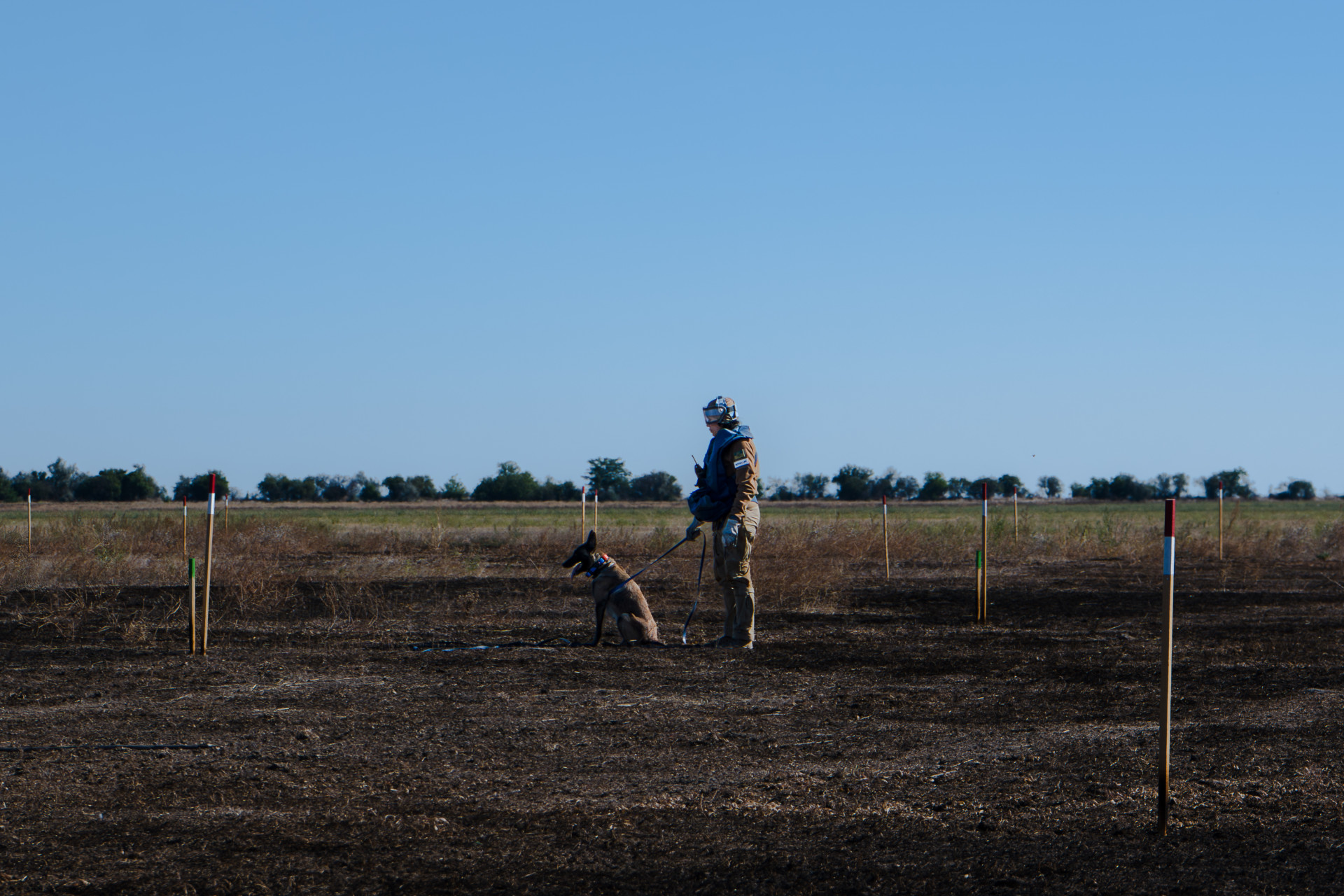
How dogs detect mines 
 
Before work begins, deminers prepare the area: they cut the vegetation, mark its boundaries and inspect the surface. The field is then divided into sections, which dog handlers and their dogs search systematically. 
 
The dogs respond not to metal, but to the scent of explosive substances. This is particularly important in Ukrainian fields, where fragments, cartridge cases, nails and other metal debris often remain after hostilities. 
 
If a dog detects the relevant scent, it sits down, explains team leader Daryna. 
 
The location is then marked and examined in detail by deminers. Because scents can be carried by the wind, a dog’s signal does not necessarily mean that an explosive item is located directly beneath its paws. 
default image alt text

When Chali detects a dangerous scent, she does not bark — she calmly sits down, giving a signal to the deminers.
It is the deminers who determine what is in the ground and, when necessary, remove the item. The dog does not replace them; it helps identify areas that require closer attention more quickly. 
 
On one site, for example, a team detected part of a Uragan rocket. Further examination showed that it was only the engine and did not pose an explosive hazard. For the dog, however, the type of object does not matter: its task is to detect a familiar scent and signal it to the handler. 
Why dogs? 
 
Belgian Malinois are used for this work in Mykolaiv region. The job requires active, resilient dogs with a strong sense of smell and a high motivation to search. They are selected while still young, with specialists assessing their ability to search, concentrate and complete tasks. This is followed by extensive specialised training, during which the dogs learn to recognise the scents of explosive substances. 
 
Some of the dogs arrive in Ukraine already trained. They have undergone training and worked in other countries, including at APOPO’s facilities in Cambodia. Their training, however, continues after they arrive in Ukraine: before working on an actual site, the dogs undergo regular assessments. These checks are not only about maintaining their skills. 
 
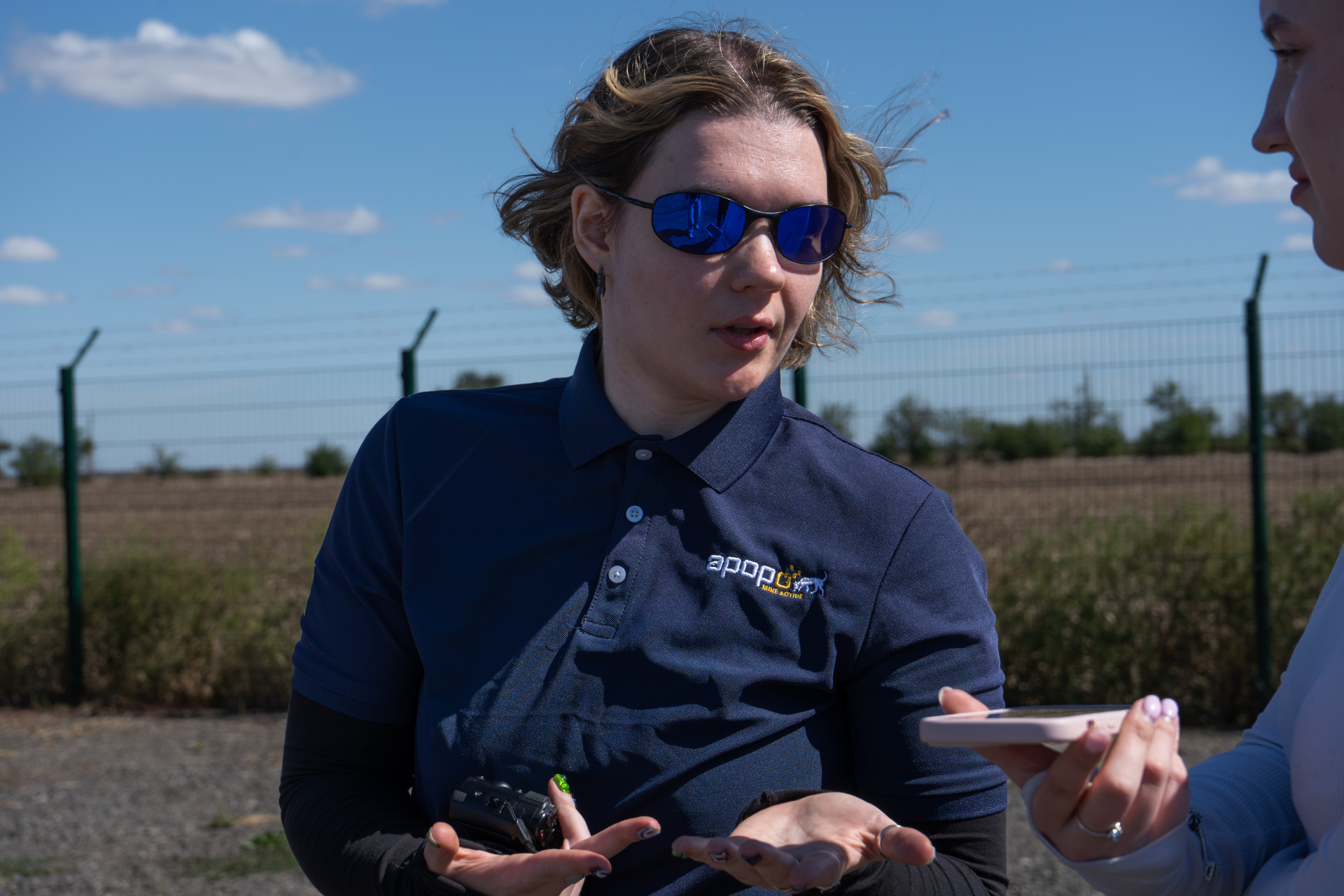
“A dog is a living being, and its condition directly affects its work. They are like people,” explains Tamila, Programme Officer at APOPO in Ukraine. 
default image alt text

Tamila knows that a dog’s condition is critical to its work — and therefore to people’s safety.
A dog may be tired, stressed or simply not in its best condition on a particular day. Handlers therefore monitor both the accuracy of the search and the animal’s wellbeing. At the training base, the dogs undergo daily checks before heading into the field. If a dog does not pass the test, it does not work that day. 

For us, the dogs are just as important as the people
The dogs can work for up to four hours a day, though less in hot weather. They are transported to the fields in air-conditioned vehicles: while some dogs are working, others rest in a cool environment. During the summer, teams were also given the opportunity to start work at around 6 a.m., as by approximately 9:30 a.m. temperatures can already become too high for effective searching. 
 
“For us, the dogs are just as important as the people,” Tamila says. 
default image alt text

Chali is ready for work.

A person and a dog work as one team 
 
A dog handler usually works with two dogs. The handler directs the search, monitors the animal’s behaviour and observes its reactions. A team leader oversees the entire operation, including the safety of both people and animals and the organisation of the search process. 
 
But procedures alone are not enough. Trust between a person and a dog is equally important. 
 
Gulnara, for example, came to dog handling with previous experience in humanitarian demining. She first worked in non-technical survey, where information about possible contamination is collected and analysed. She then moved on to manual demining before eventually beginning to work with dogs — something she had wanted to do from the start. 
 
Today, she works with Chali. Gulnara knows her behaviour well and can notice even the smallest changes during a search. According to Tamila, their bond has long gone beyond a purely professional relationship. 
 
In the future, Gulnara is considering becoming a team leader, although for now she wants to continue working directly in the field. 
 
Around 60% of staff in operational roles on the team are women. Five of the eight team leaders are women. More veterans have also recently begun joining the teams. 

There are different paths into the profession: some people start by caring for the animals and later become handlers, while others come from different areas of humanitarian demining. 
default image alt text

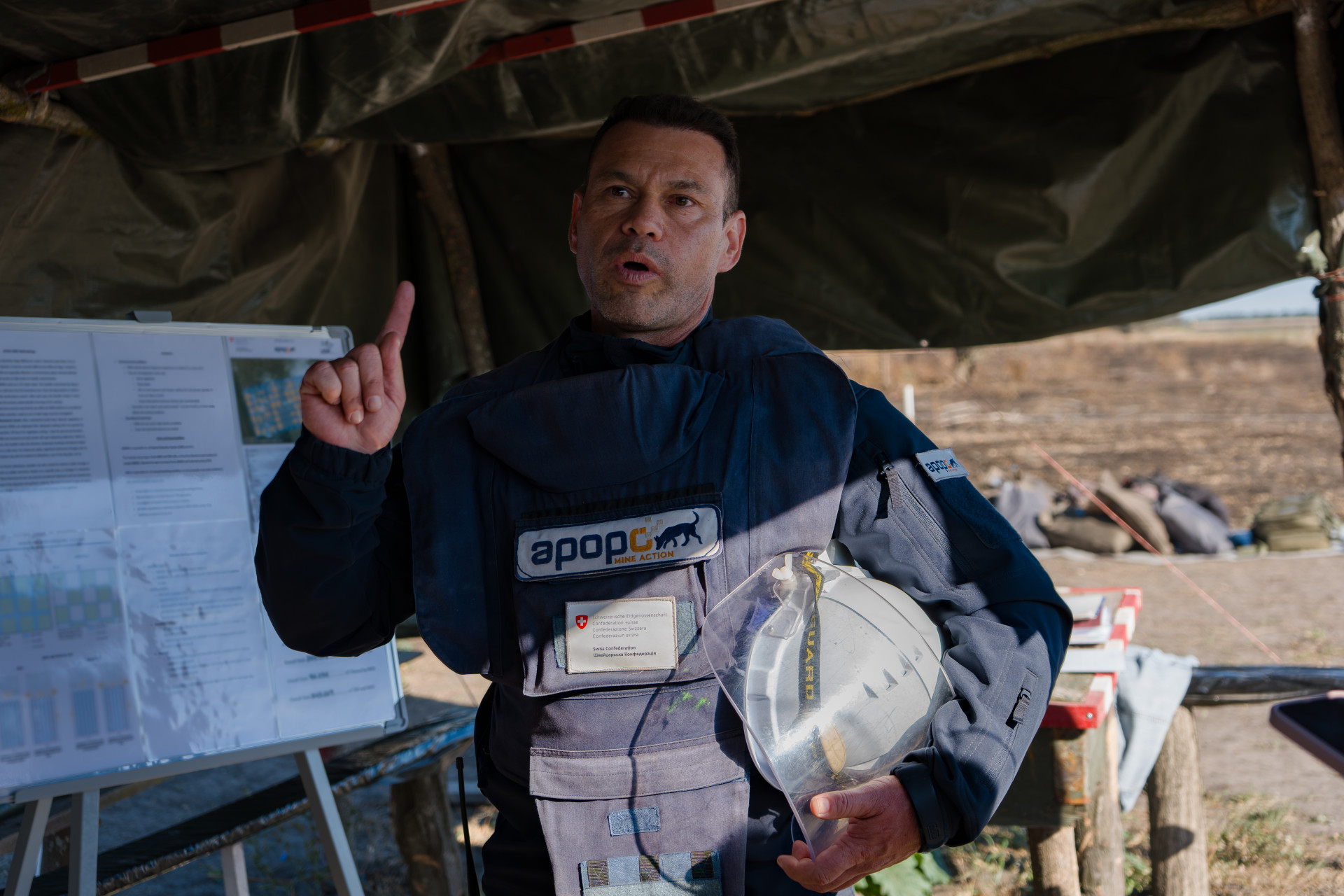
An APOPO team member gives a briefing.
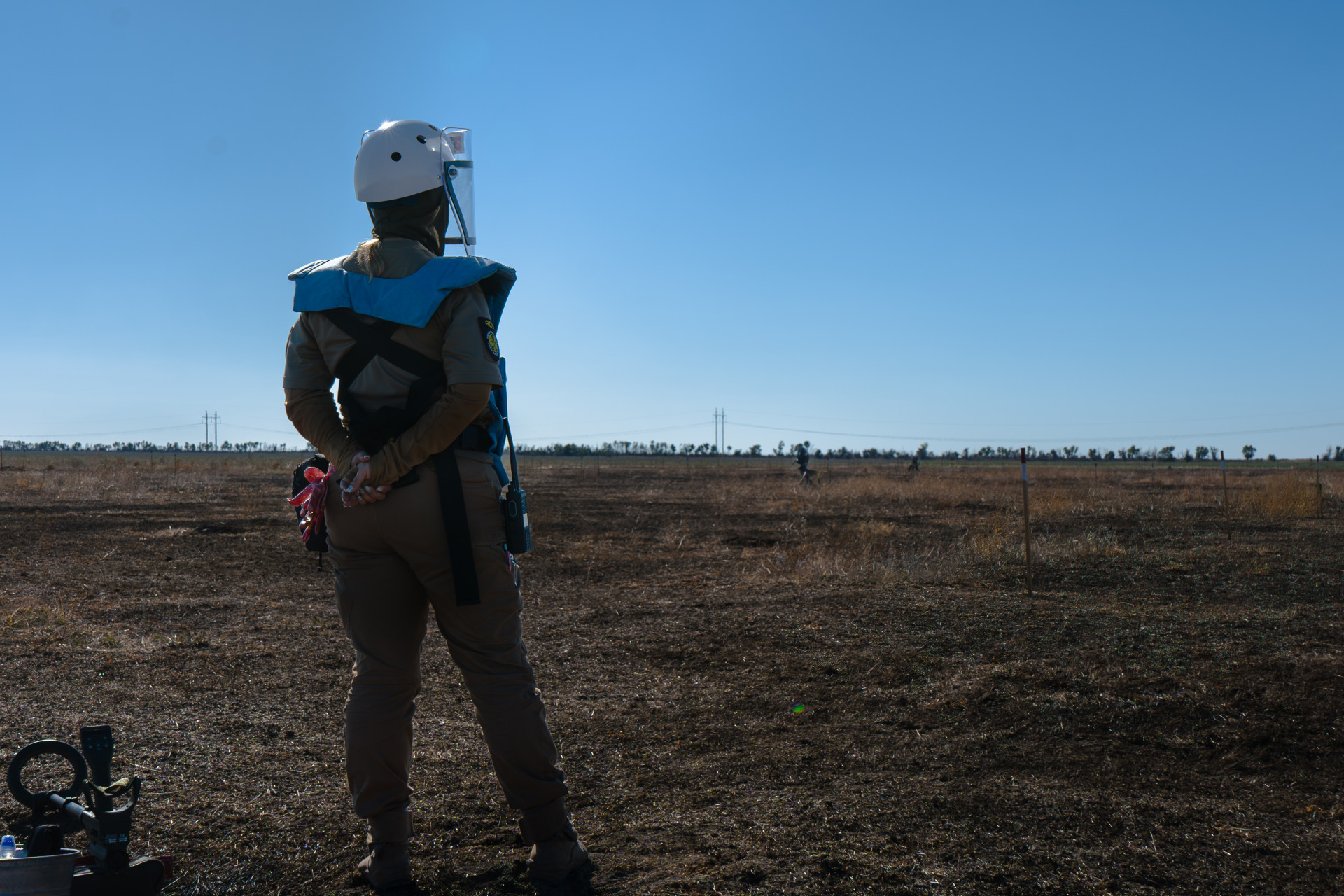
A training base in Mykolaiv region 
 
To avoid having to transport the dogs constantly between different cities for training and assessments, a dedicated training base is being developed in Mykolaiv region. 
 
Conditions there are designed to resemble a real field as closely as possible: the site includes different types of vegetation, prepared areas and explosive ordnance items placed in the ground for training purposes. 
 
Different types of munitions have different compositions and therefore different scent profiles. Dogs need to learn to recognise as wide a range of these scents as possible. Once an item has been placed in the ground, it takes around three months for the scent to develop naturally enough for training. 
 
In the future, the base is also expected to provide training and accreditation for dogs from other organisations working in humanitarian demining. This would allow part of the preparation process to take place directly in Mykolaiv region. 
Returning land to people 
 
The work is painstaking and highly dependent on conditions. On one site, the team worked for around three months. Cold weather delayed the start of the operation, while summer reduced the number of hours in which dogs could work effectively. 
 
Behind every square metre surveyed is more than just a statistic. It is land that can once again be cultivated and used safely. 
 
The project aims to return 2 million square metres of Ukrainian land to safe use. Several large artillery projectiles and rockets were already found and safely removed. 
Behind every square metre surveyed is more than just a statistic. It is land that can once again be cultivated and used safely.
default image alt text

The team of people and dogs faces a major task: helping make Ukrainian land safe again.

The project brings together complementary expertise. APOPO contributes its experience with mine-detection dogs, Ukrainian deminers provide essential knowledge and operational capacity on the ground, and Switzerland finances teams, equipment and the development of this demining capacity in Ukraine. 
 
As part of the project, APOPO supports two teams comprising a total of five dog handlers. The project also includes plans to use a remotely operated vegetation-clearance machine to help prepare areas more quickly for subsequent survey. 
 
For Switzerland, humanitarian demining is not only about returning agricultural land to use. Above all, it is about people’s safety and enabling communities to regain access to land on which livelihoods and everyday life depend. 
 
In the fields of Mykolaiv region, this process happens metre by metre. Chali detects a scent and sits down. Gulnara marks the signal. A deminer inspects the site and decides what happens next.
 
It is a small sequence of actions, repeated again and again. Each one brings another piece of land a little closer to the day when people can use it safely once more. 
Partnerships for the goals / 17
Life on land / 15
Good Health and well-being / 3
after
24 feb 2022
What else is Switzerland doing for Ukraine?
Switzerland has been assisting those impacted through various means – from humanitarian aid, humanitarian demining and financial support to granting protection status S to individuals from Ukraine seeking refuge. By 15 February 2024, the Swiss federal government had spent a total of around 3 billion Swiss francs to support Ukrainian refugees in Switzerland and people in Ukraine.

In 2022, Switzerland organised the first Ukraine Recovery Conference in Lugano and launched the political process to help Ukraine rebuild. The Summit on Peace in Ukraine, held in Switzerland in 2024, set up a path towards a just and lasting peace in Ukraine. In the longer term, the Federal Council aims to allocate 1.5 billion Swiss francs to support Ukraine's recovery efforts by 2028.
organic farming
energy efficiency
search for missing persons
food security
culture
tourism
diplomacy
peace process
health
psychosocial support
protection
education
gender equality
sustainable cities
water access
human rights
demining