swiss logo photo
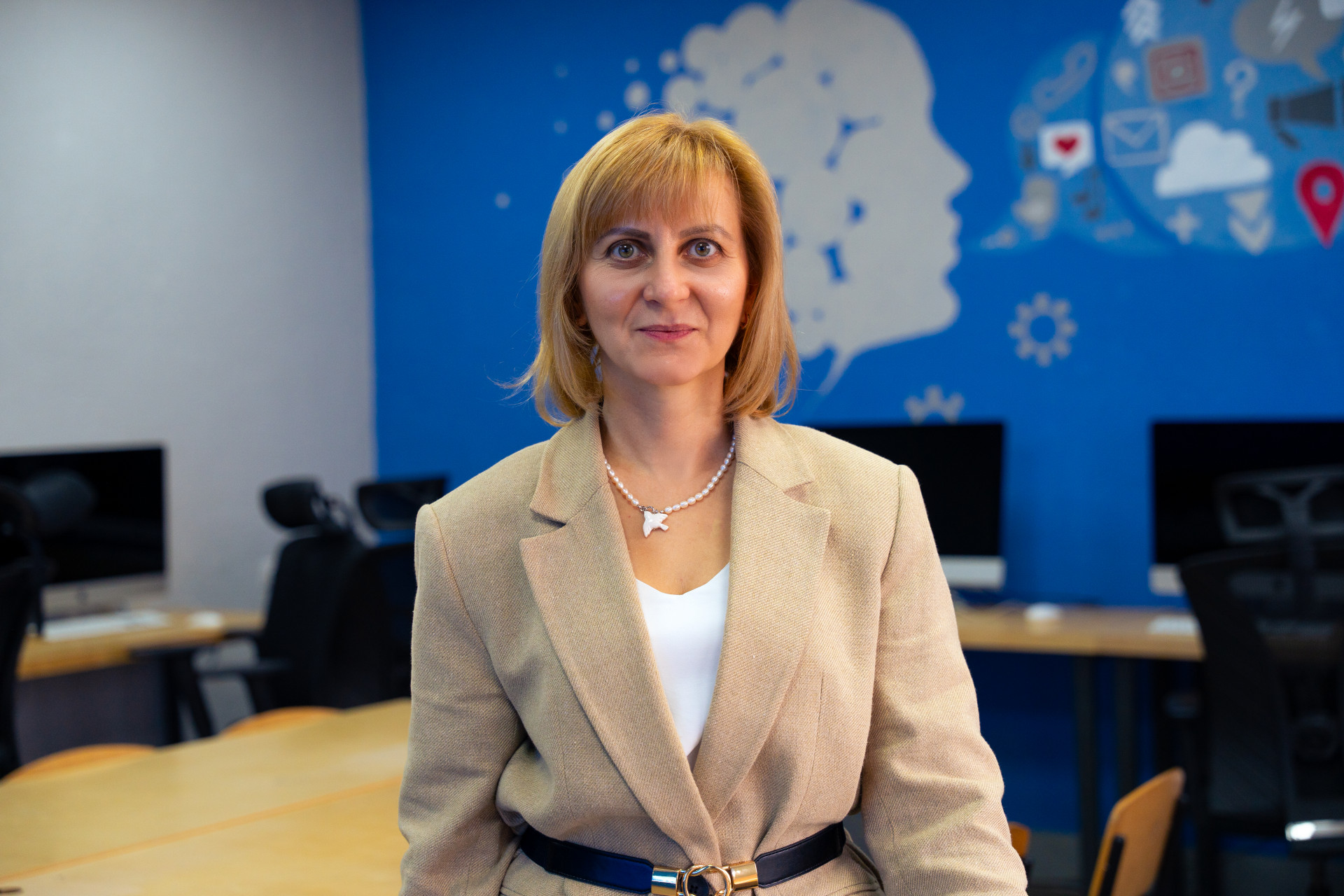
Meet Yuliia Stepaniuk
Yuliia Stepaniuk
[ region ]
Volyn
14 / 01 / 2026
Principal of the lyceum in the village of Zymne, ambassador of digitalization
[ topic ] Education, E-governance
There are about 12,000 schools in Ukraine, and among them, the issue of the education gap between schools in large cities and those in small towns and villages remains relevant.

But even in comparatively small schools, it is possible to create innovation hubs and provide quality education through digital technologies. The principal of a lyceum in Volyn region, Yuliia Stepaniuk, with the support of Switzerland and the EGAP program, has done exactly. This is the story of a student who became the principal of her home school and an ambassador of innovation.
Quality education  / 4
“Children are equally talented everywhere — whether in a metropolis or in a small village. But sometimes they have different opportunities. I dream of every child having access to technology and knowledge.”

Yuliia Stepaniuk is the principal of the lyceum in the village of Zymne in Volyn region. She not only dreams but acts. Fewer than a thousand people live in Zymne, yet her educational institution features a whole laboratory with modern computers, interactive panels, a 3D printer, and digital microscopes. And also various robots and mechanisms. And the trophy cups on the shelves, won by talented local students.
From student to principal
Yuliia recalls that, since childhood, she has specifically wanted to be a teacher. She graduated from Lviv Polytechnic University and shortly after began working at her home school.

“My first lesson ever was algebra, grade 7. They were the loudest kids in the whole school. I was very nervous, and my aunt, who also worked at our institution, later confessed she spent the entire lesson standing behind the door, listening to make sure everything was okay. But it all went really well, and as energetically as it started, it continued. There is always this amazing energy with children — you don’t even feel your age.”
default image alt text

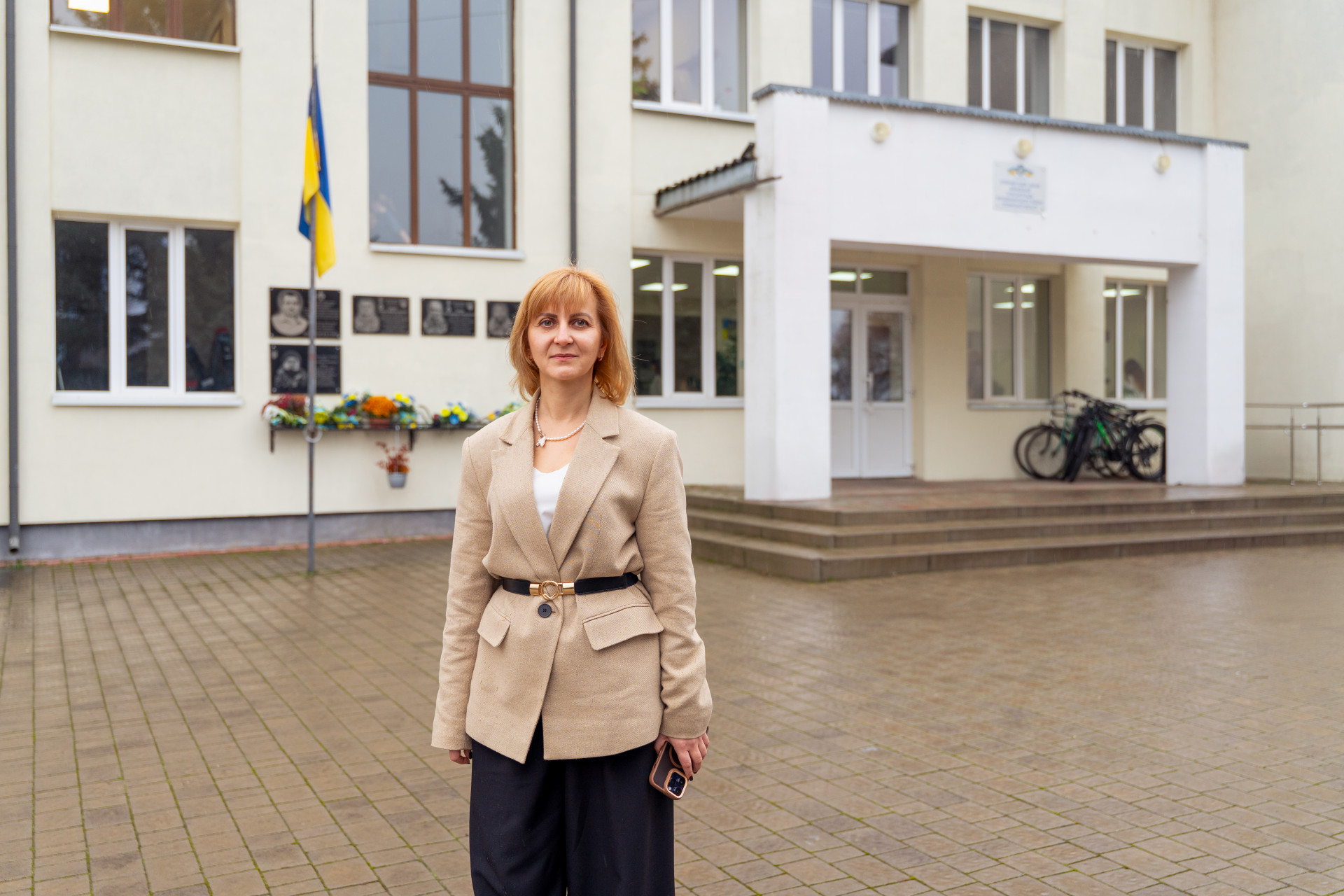
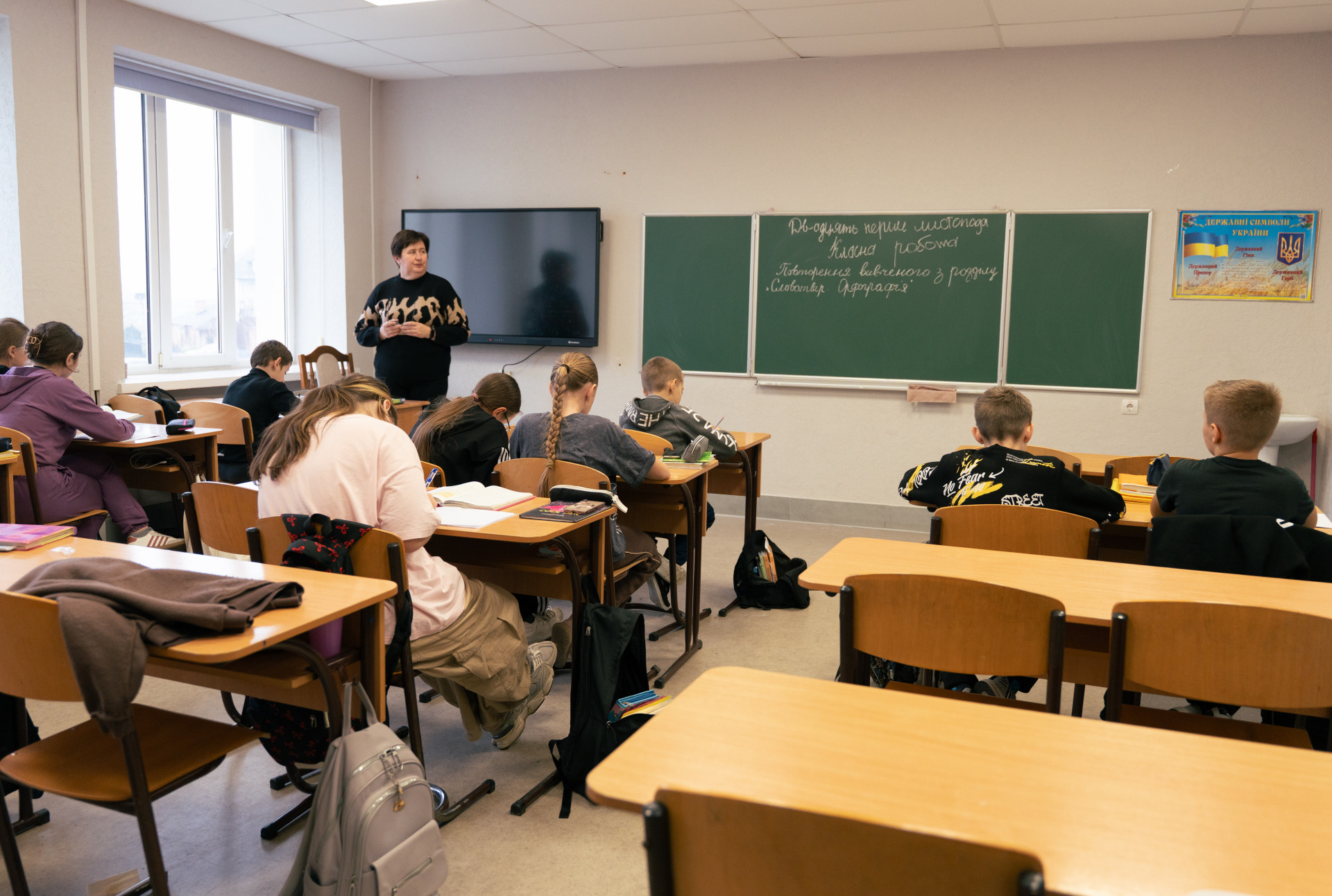
Yulia Stepaniuk in front of her native lyceum.

Later, Yuliia herself became head of her home lyceum. Several teachers who had once taught her suddenly became subordinates of the new principal. When Yuliia took up the position of principal, 168 children were studying in Zymne. Now there are 265. The quality of education is reflected in the fact that students from the nearby city of Volodymyr travel daily to study in the village. In addition to the standard curriculum, there are numerous extracurricular clubs: drawing, music, and, of course, robotics. On the roof, there are solar panels for energy independence. All this thanks to support from Switzerland.

“Six years ago, we learned about the Swiss-Ukrainian program “E-Governance for Accountability and Participation” (EGAP). The first tangible result of cooperation was our experience during the pandemic. At that time, all of Ukraine was forced to switch to remote learning. And we managed this extremely easily, because all teachers already knew how to use digital services. Moreover, together with EGAP, we later taught other schools across the country how to use all of this.”
default image alt text

default image alt text

The main goal of EGAP is to improve the quality of life of Ukrainians through convenient and transparent government services implemented by the authorities in close cooperation with citizens.The program is funded by Switzerland and implemented by the East Europe Foundation.

Developing digital education is only one element of EGAP’s activities; the program also helps develop public policies, implement digital democracy tools, and online services at the national and regional levels. And Yuliia herself has been directly involved in one major digital transformation project.
A “Dream” come true
“In 2020, I thought: why not get rid of paper class registers where all grades, attendance schedules, and lesson topics are recorded? I brought this to the staff and the majority supported it, though some remained afraid of innovation. With EGAP’s support, we developed all the documentation, procedures, and methodological recommendations. And for five years now, we’ve been working with digital journals. And since then, another 600 schools have transitioned to digital systems using our methodology with EGAP,” Yuliia explains.
default image alt text

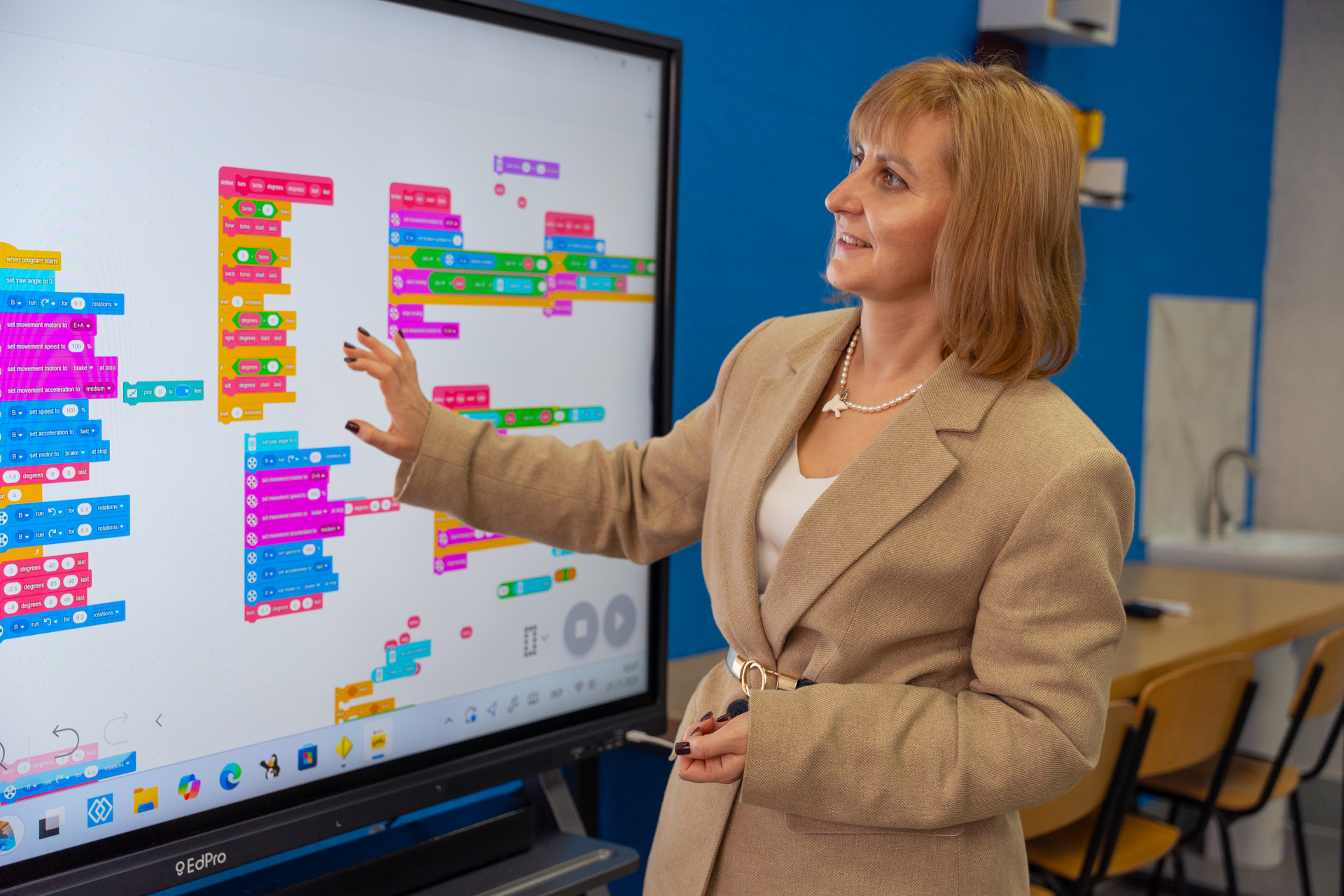
Yuliia Stepaniuk works with an interactive panel.

According to the principal, those teachers who initially feared innovation eventually became its most devoted supporters. And the developed system even allows using seemingly analog functions: adding a “plus sign” in the register or a preliminary “pencil” grade.

Another major project supported by EGAP is Mriia (“Dream” in Ukrainian). This is an entire state ecosystem for teachers, students, and parents, designed to make school education more effective and focused on the needs and talents of each child. In Mriia, Yuliia is an implementation expert.

“Sometimes I need to explain something to the development team from a school’s perspective, in teachers’ terms. Sometimes it’s the opposite: I hold a session for educational institutions to present the capabilities of Mriia. I joke that I act as a sort of translator between the languages of government and education.”

As of September 1, 2025, 2,300 schools across Ukraine have already begun working with Mriia.
Robots and humans
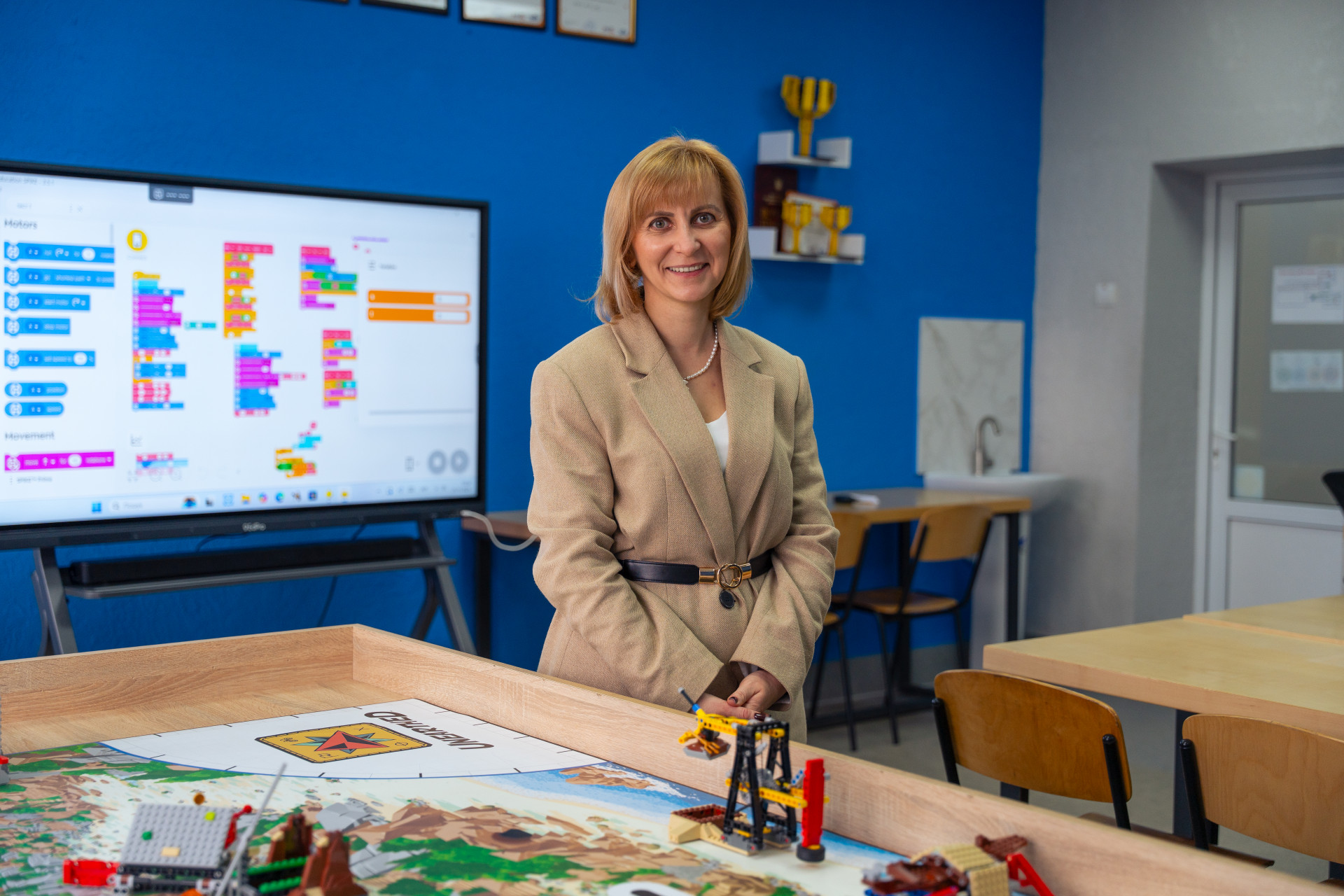
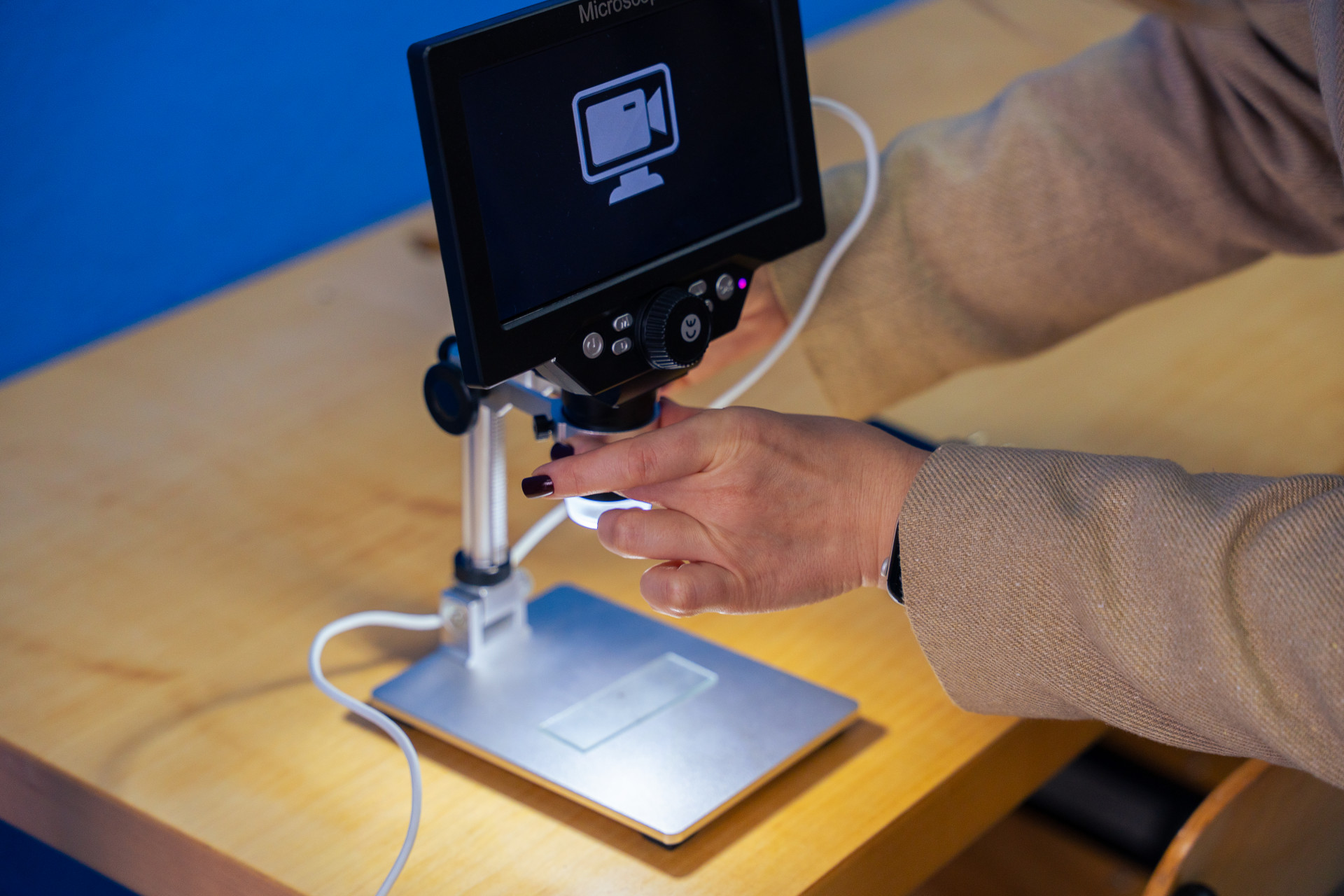
A special pride of the lyceum in Zymne is its STEM classroom. Setting it up was made possible thanks to support from Switzerland.

EGAP’s support includes not only the provision of equipment, but also teacher training and ongoing guidance, as well as assistance to students in preparing for competitions. Overall, the EGAP program encourages and helps schools join national and international robotics contests. And since 2023, teachers have been regularly taking part in training sessions — with experts, equipment suppliers, and others. In addition, a robotics coach works at the lyceum — an IT teacher who continually undergoes EGAP training.

“When Swiss representatives visited us, they were very happy to see that all this equipment is constantly in use. We even have a separate Robotics subject and an extracurricular robotics club. And the children regularly participate in various competitions and olympiads,” Yuliia says.

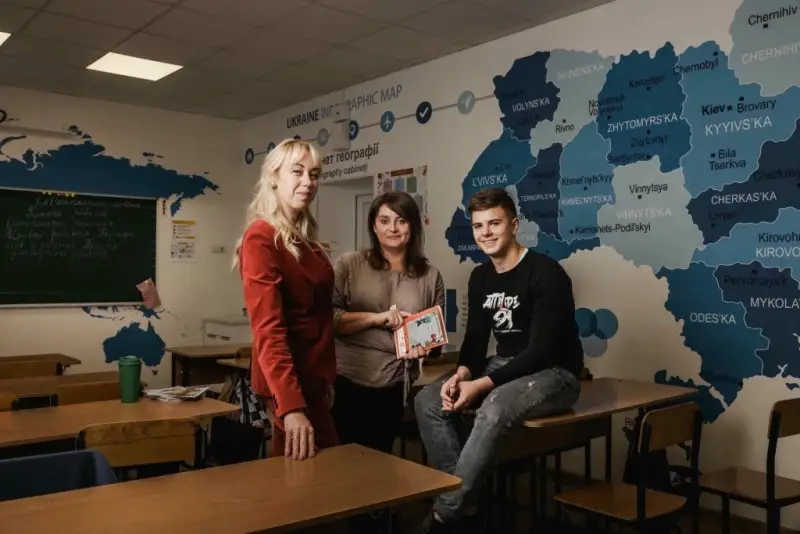
Her words are confirmed by a special shelf holding numerous trophies from robotics competitions. And a large part of the room is occupied by a huge table with a map and bizarre constructions on it. This could be another trophy in the lyceum’s collection: a student project for the global competition, The FIRST Lego League. In just a few months, the Ukrainian students will take it to the finals in Houston.
default image alt text

default image alt text

“We have to build a robot, place it in a certain zone, launch it, and it must complete all the missions on its own. That is, we ourselves build the robot, its manipulators, all the devices, and we ourselves write all the code for it,” shares Roman, an eighth-grader and one of the members of the lyceum’s team, with enthusiasm.

This year’s theme is archaeology. The students have already found an archaeologist from Kyiv who is advising them on the project.

The principal admits that children do not need extra motivation when it comes to studying or using technology. According to her, students find it all fascinating. And the teachers’ role here is to show that smartphones and computers are not only for games. Right now, the 11th graders at the lyceum are studying artificial intelligence. Moreover, many students already say that in the future they want to work specifically in technology and IT.

“Sometimes it’s interesting to look back. When I started working in 2008, I explained to children what a computer mouse is. And now, when children sit down at monitors, I have to explain this again. Because they instinctively start moving their fingers across the screens, they’re used to tactile control rather than mice,” Yuliia recalls.
 
But the most important thing, says the principal, is that children are not afraid of technology. They aspire to develop it in Ukraine — and to grow along with it.

“And we will help them with that,” she smiles.
Quality education  / 4
after
24 feb 2022
What else is Switzerland doing for Ukraine?
Switzerland has been assisting those impacted through various means – from humanitarian aid, humanitarian demining and financial support to granting protection status S to individuals from Ukraine seeking refuge. By 15 February 2024, the Swiss federal government had spent a total of around 3 billion Swiss francs to support Ukrainian refugees in Switzerland and people in Ukraine.

In 2022, Switzerland organised the first Ukraine Recovery Conference in Lugano and launched the political process to help Ukraine rebuild. The Summit on Peace in Ukraine, held in Switzerland in 2024, set up a path towards a just and lasting peace in Ukraine. In the longer term, the Federal Council aims to allocate 1.5 billion Swiss francs to support Ukraine's recovery efforts by 2028.
organic farming
energy efficiency
search for missing persons
food security
culture
tourism
diplomacy
peace process
health
psychosocial support
protection
education
gender equality
sustainable cities
water access
human rights
demining