swiss logo photo
[ Education ]
23 / 06 / 2026

How children learn thanks to the digital ecosystem Mriia, supported by Switzerland

-
By -
How children learn thanks to the digital ecosystem Mriia, supported by Switzerland
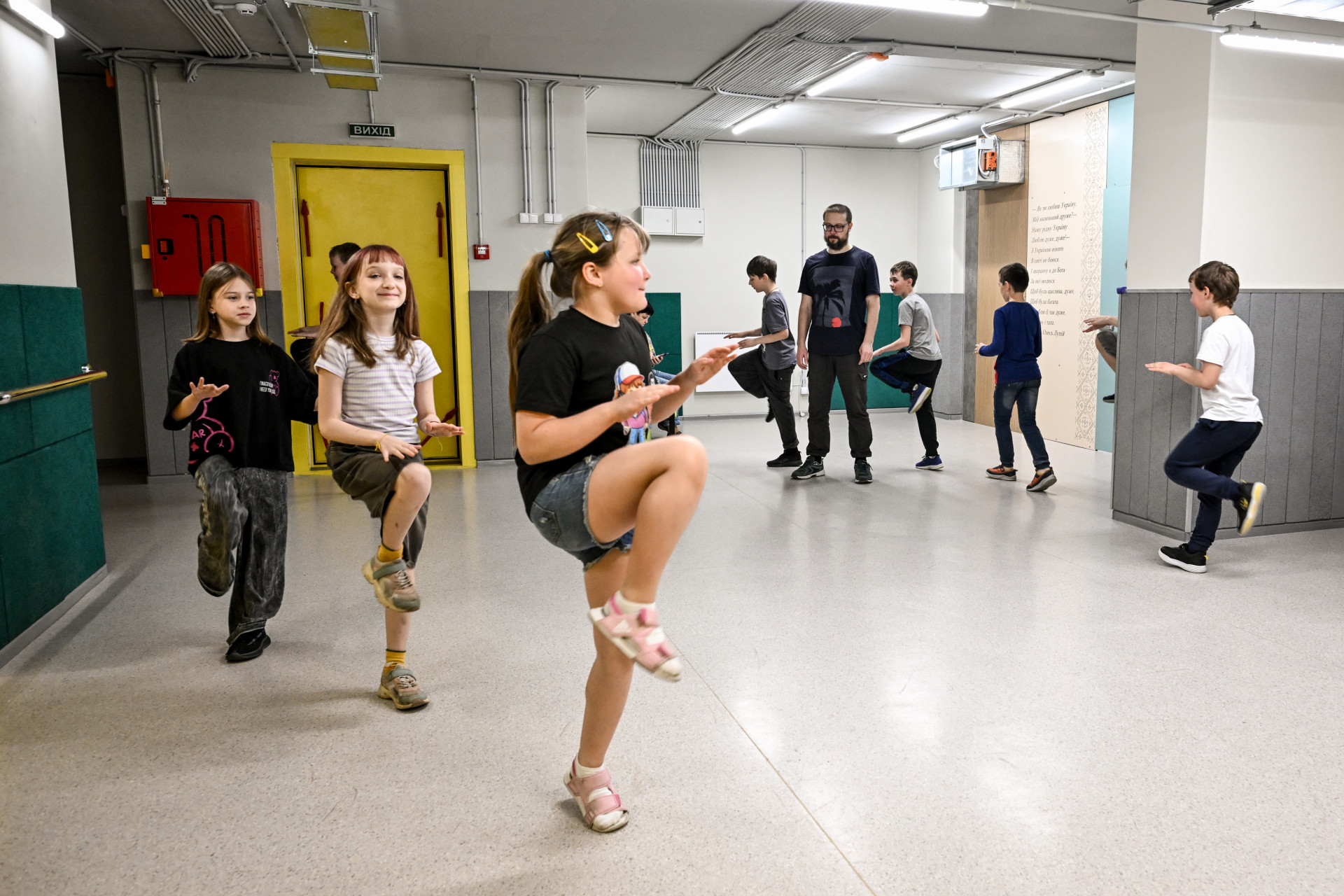
In Zaporizhzhia, 20 kilometres from the frontline, children attend classes in underground schools. Here, in the modern space of gymnasium No. 32 at a depth of 7 meters, poems by Ukrainian poets are on the walls, classrooms are equipped with interactive panels, and children play tennis during breaks. The educational foundation for teachers, students, and parents is the state digital ecosystem Mriia (“Dream”), whose development and implementation was supported by Switzerland. Among those setting up the ecosystem, and encouraging colleagues not to be afraid of new technologies, is the computer science teacher Danylo Khilko.
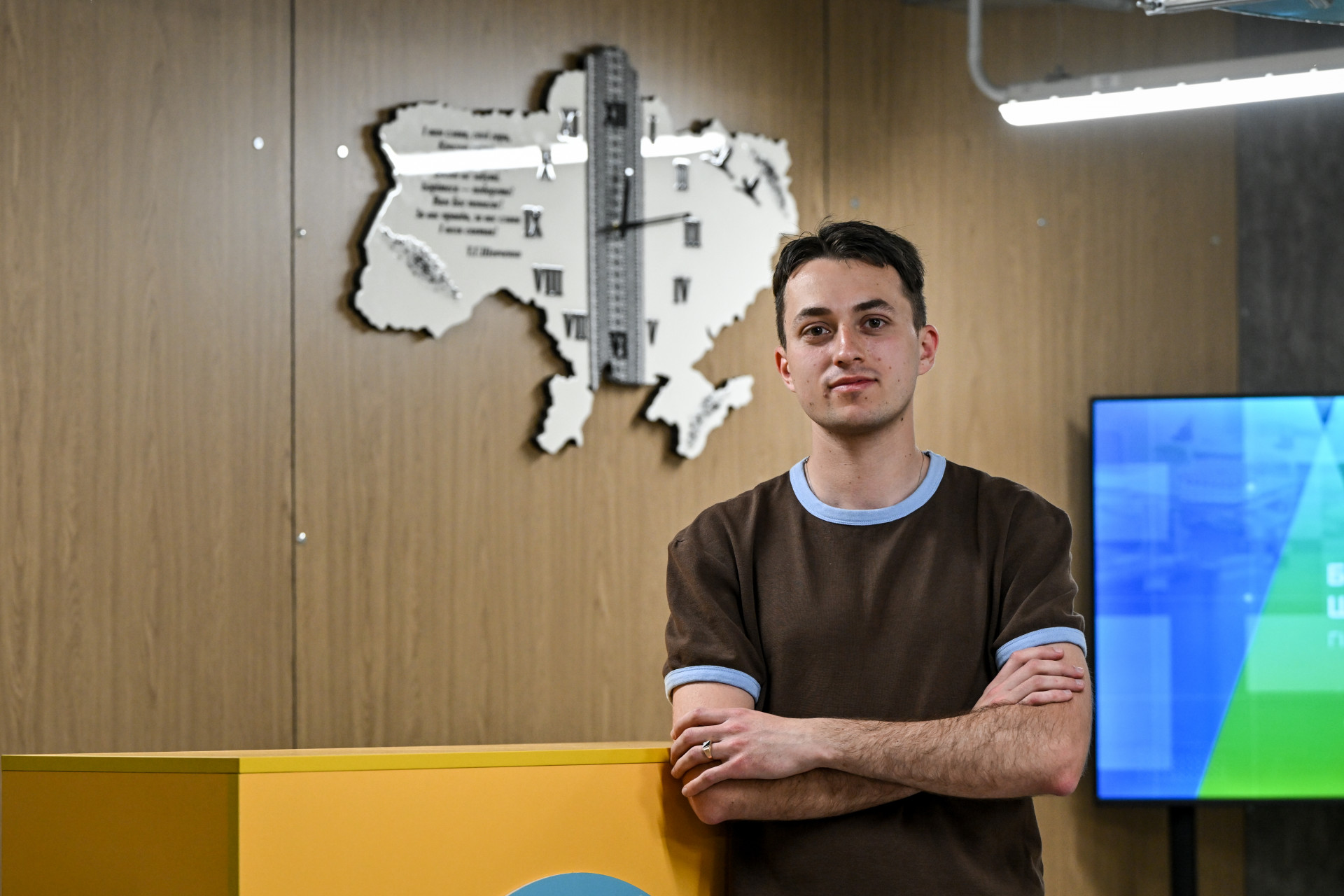
26-year-old Danylo Khilko has been working at the school since 2020. Now he is not only a computer science teacher, but also a class tutor, and an administrator of the state educational ecosystem Mriia. At the school, he is known as a person who is constantly modernizing something.
 
He once personally redecorated his computer science classroom — brought decor and posters to make the space more lively and interesting for the children. Now, instead of the usual school stands, there are posters with favorite cartoon characters, anti-stress drawings, and photo collages made by the students.

"If you build communication with a child, everything will work out for you. Even the most boring topic will be interesting. With the senior classes, you generally feel like you're on the same wavelength," says Danylo and fondly recalls the surprise the students organized for his birthday. They came to his home to greet him with balloons and pastries.
Learning underground
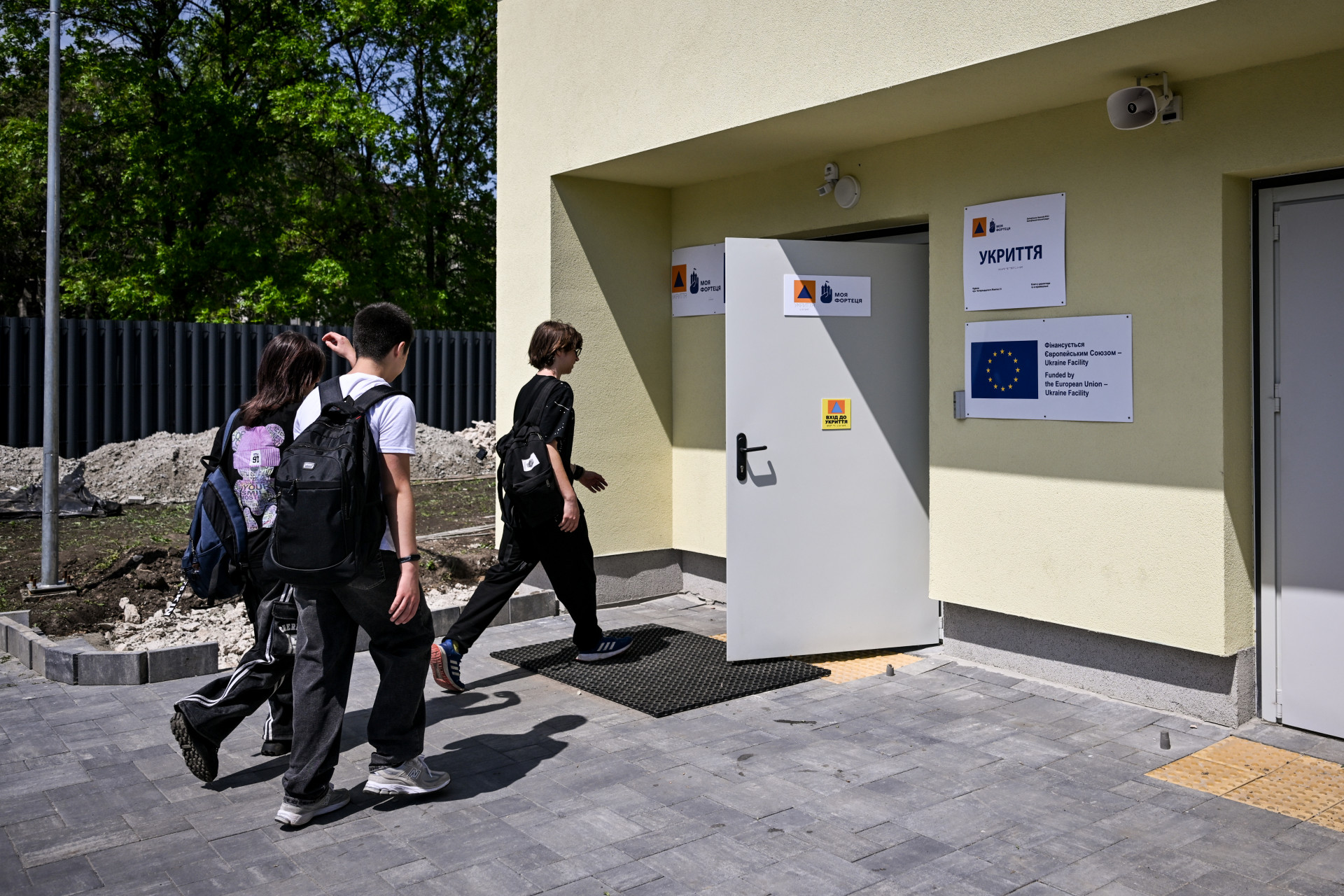
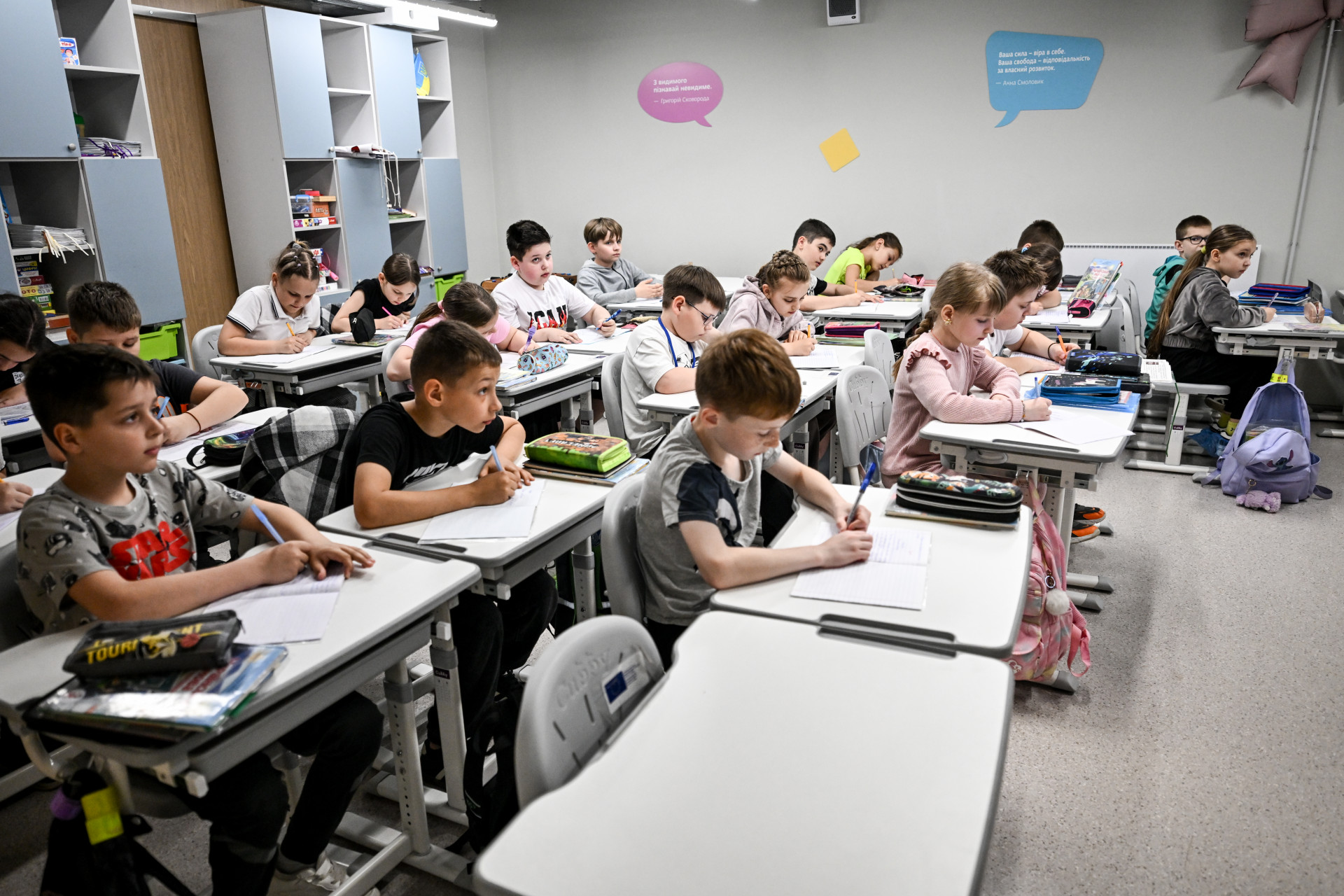
The underground classrooms in Zaporizhzhia Gymnasium No. 32 were opened at the end of 2025. They were built separately from the old building, which is currently not in use since learning above ground is too dangerous in the ongoing war. Now, about 600 children study here in two shifts. The space is equipped with 19 full-fledged classrooms, lounge areas, a relaxation room, a medical post, and active recreation zones.

"Everything is arranged here so that there is always a comfortable temperature. When it was winter and minus 15 degrees outside, the children downstairs walked around in T-shirts. The ventilation and air conditioning work, everything is autonomous. If there is no electricity, the generators start automatically. Instead of the usual school bells, we use musical melodies of the famous Ukrainian songs: 'Cheremshyna' (Bird Cherry) and 'Kray, miy ridnyi krai' (My land, my native land)," Danylo explains.

Lessons here are somewhat shorter than the classic Ukrainian ones — only 30 minutes. This is done so that the school can work in two shifts.

"When we returned to the classrooms in person, the contrast was palpable. The children seemed to have forgotten what socialization was. They didn't have a normal teenage life. But gradually, returning to the peers changed the situation," says Danylo.
All for a very important goal: so that the children can return to the live, in-person learning experience, which was interrupted first by the pandemic and then by the full-scale invasion.
Digital instead of paper journals
For over a year, the gymnasium has been working with Mriia — the state educational ecosystem for teachers, students, and parents, supported by Switzerland within the framework of the Electronic Governance for Accountability and Participation (EGAP) program.

Danylo was one of those who insisted on connecting the school to the ecosystem as one of the first in the city.

"We were not on the list of the first 40 schools in Ukraine to participate in the pilot project. But I constantly visited the website and submitted applications because I understood that this is the future. There was a fear that it would be difficult to change the teachers' mindset, since people get used to one format. But I decided to take the risk," he recalls.

At first, Danylo figured out the ecosystem on his own: transferred the schedule, set up the journals, entered the teachers' workload, and filled in all the information about the educators. This made it possible to visually demonstrate to the teachers how the ecosystem works.
 
Previously, a teacher's work was not only teaching, but also a ton of paperwork that was easy to get tangled in. 

In Mriia ecosystem, every teacher sees the schedule, lesson topics, children's academic performance, and can even immediately analyse who is aiming for a certificate of excellence based on their average score. A separate section is extracurricular activities, which contains information about clubs and after-school groups for primary school children.


Now, almost all school documentation operates through Mriia: grades, journals, homework, performance statistics, messaging between teachers, students, and parents. Everything is on one web portal and a mobile application.
"I am sure that the teachers did not regret joining Mriia. In the past, a lot of time was spent on this. But now a few clicks are enough, and the ecosystem itself generates a certificate of achievement (previously this was called a 'report card'). The system automatically calculates what grade a child has for each skill," he says. 

In addition, through Mriia, teachers can create tests using artificial intelligence based on materials and textbooks. Educators from the school were directly involved in the beta testing.
Not alone with the war
Danylo was born in Tokmak, which Russia occupied in 2022, and then moved with his parents to Zaporizhzhia. Despite the constant shelling and danger, he does not plan to leave the city.

"I never thought about the danger. Perhaps it's a bad thing when UAVs are flying overhead. But I stay in Zaporizhzhia because my parents, friends, students, my whole life is here. I never seriously thought about moving," says Danylo.

He explains that this is exactly why it is important to him that even during the war Ukrainian education was not left alone with its problems.
I want to thank Switzerland for investing such significant funding in Ukrainian education.
" The creation of Mriia made it possible to ease the work of teachers and encourage parents to stay engaged with their children’s learning progress. From the bottom of our hearts, we would like to say thank you that we were not left alone with the war and all these challenges," he says.

When the conversation turns to the future of the children, Danylo wants his students not to look for a life elsewhere, but to stay home, in their native country, which they will be able to change for the better. And so that the generation currently learning underground can finally see a life without war.
default image alt text

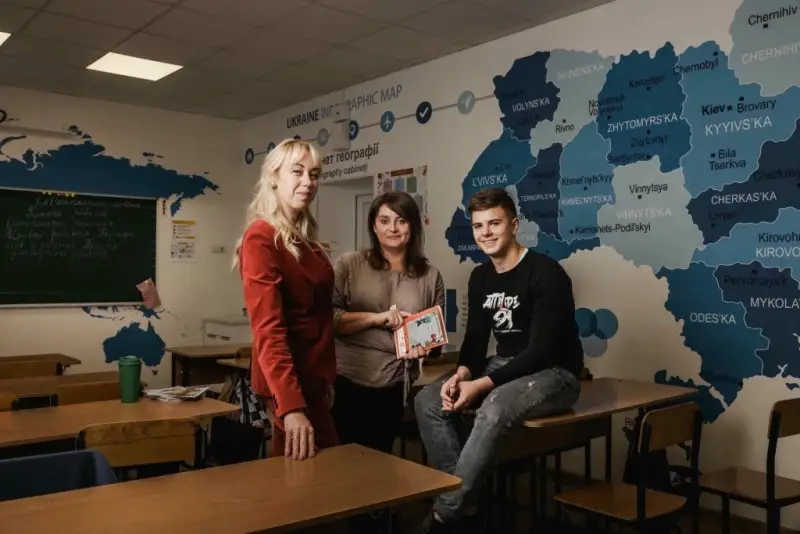
The children engage in active warm-ups 7 meters below the surface.

default image alt text

The entrance to the underground school, where 600 children study in two shifts.

Mriia for everyone
For students, there are also significant advantages thanks to digitalization. They can easily view their timetable, lesson topics, grades, and learning progress, as well as access the content of a library at any time, which includes short videos and educational series on a wide range of topics.

An important feature is the digital student ID. In Zaporizhzhia, it can already be used for free travel on public transport. It is enough just to show the Mriia.ID on a smartphone.

Parents have their own opportunities too. They can monitor their children's academic performance without school chats and calls, Khilko explains: "In Mriia itself, there is an internal messenger. There is no need to call the teacher at ten in the evening. You can simply write a message in the application with a request, for example, to explain why the child has that exact grade." 
default image alt text

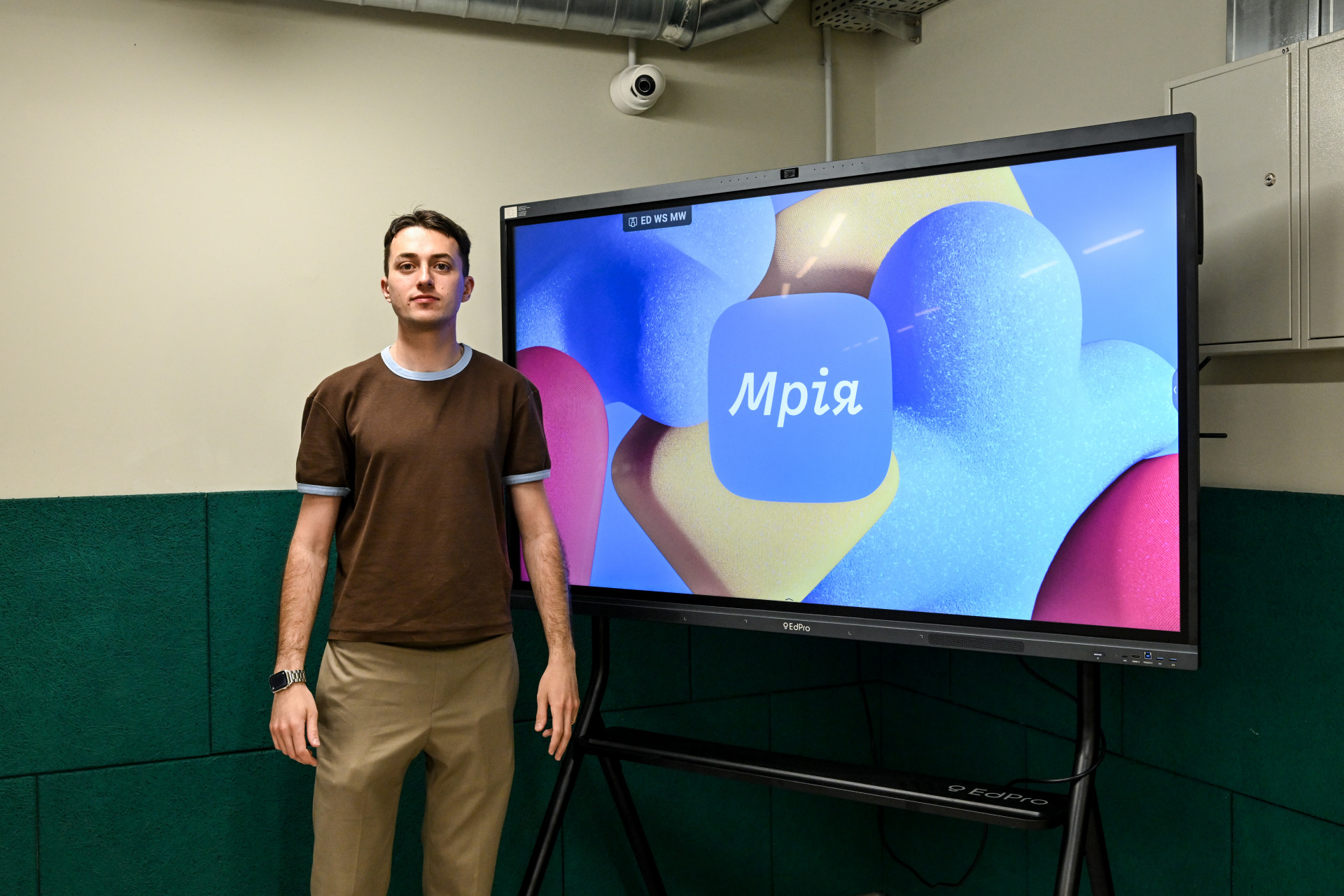
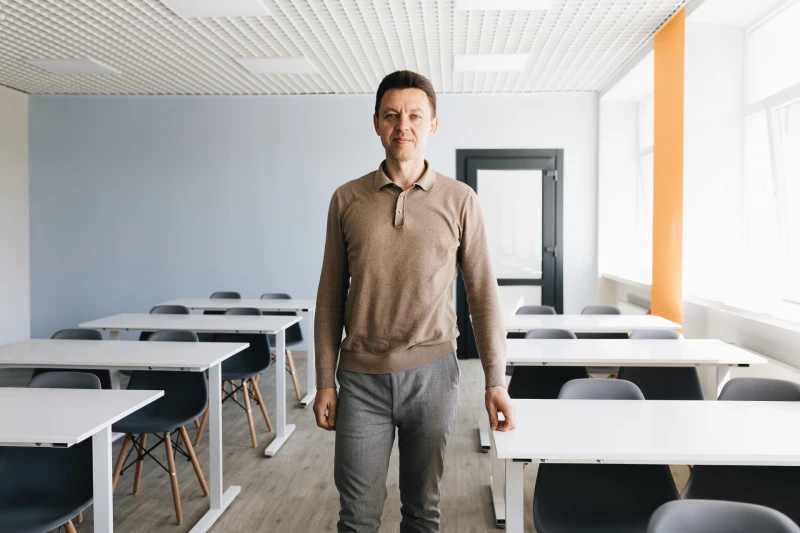
Danylo Khilko at the school, which has become more than just a job for him — it’s a true passion.

default image alt text

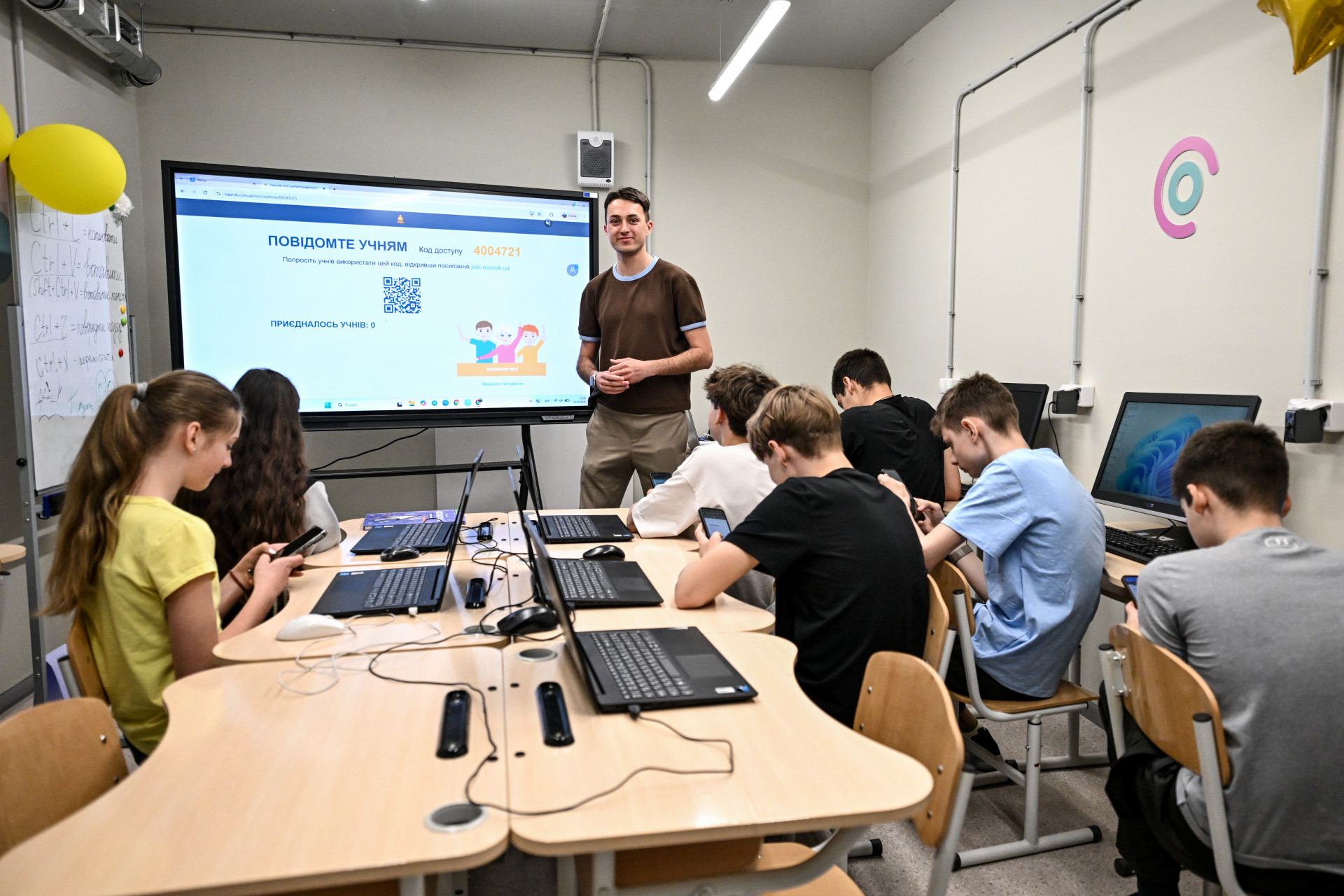
A lesson in the underground school

The next step that Danylo dreams of is the full-fledged launch of another ecosystem feature in Zaporizhzhia schools. "Mriiky" (little dreams) is an internal motivational currency for students:

"Suppose a child has completed a quiz, watched a video, or improved their average grade during the week. For this, they receive rewards for entertainment or leisure, for example, movie tickets. This is a great motivation."

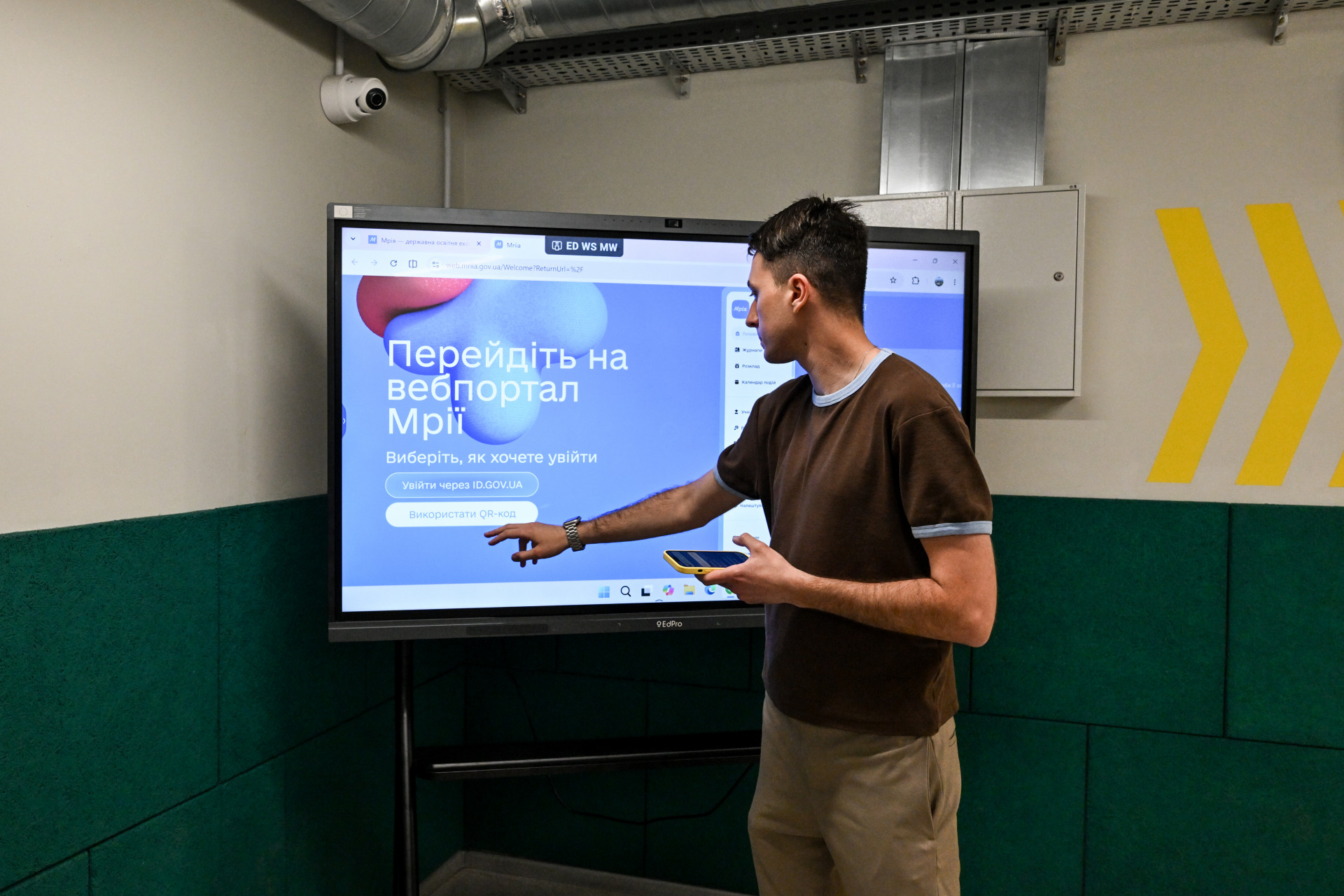
In addition to lessons, Danylo, as an administrator of Mriia, records short video instructions for colleagues, explains how to work with the ecosystem, helps transfer journals and generate reports.

The most work, Danylo says, falls at the beginning of each semester. That is exactly when it is necessary to check that all the students are in the ecosystem, form classes, enter the teachers' workload, set up the lesson schedule, enter information about holidays, and generate a student attendance report. However, after that, the system practically takes over most of the processes and subsequently operates automatically.

"The work of a Mriia administrator is sometimes invisible. I need to check the presence of all students and teachers in the state education register, conduct class checks, and generate all the necessary data before the new school year. If we're talking about feedback, no one comes up and says, 'You have changed my life.' But when they write to you, 'Oh, thank you, understood' — that is already enough," he smiles. 
Currently, over 3,800 schools, i.e. this is every fourth institution in Ukraine, are already using Mriia, along with 600,000 users: students, teachers, parents, and school administration.
 The goal is to ensure that every school that wants to work with modern digital tools has access to a high-quality state digital solution that can be quickly implemented. Switzerland continues to support Ukraine in the areas of digitalization and e-governance and has already allocated 58.7 million Swiss francs (3.3 billion UAH) for this purpose over the period of 2024–2028. 
Quality education  / 4