swiss logo photo
[ Demining ]
01 / 12 / 2025

Ukraine is the most mined country in the world. Here are the people who are helping to change it

-
By -
Ukraine is the most mined country in the world. Here are the people who are helping to change it
Ukraine is described as the most heavily mined country in the world — 139,000 square kilometers are potentially dangerous. This is 23% of the country’s territory. Switzerland has allocated billions of hryvnias to help these lands return to peaceful life. This is a story about humanitarian deminers in Ukraine and the vital work they do.

“I’m thrilled when we manage to find something. Truly! We are deminers — our job is to find things. Because we know that if an explosive item ends up in our hands, it won’t be able to harm anyone else. And that is what matters most.”

default image alt text

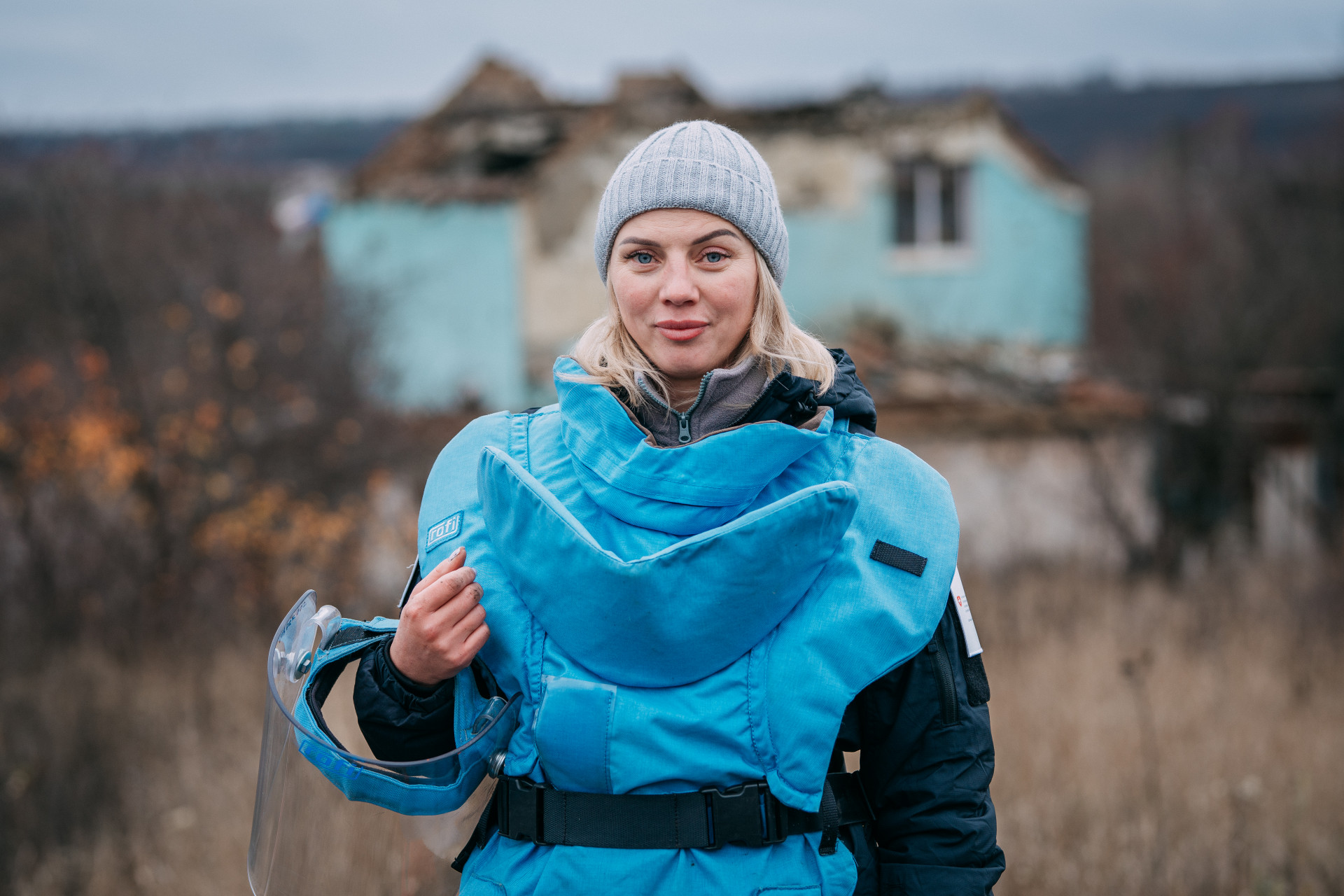
Anna once worked in agriculture; now she supports the same sector by clearing Ukrainian land.

default image alt text

Anna once worked in agriculture; now she supports the same sector by clearing Ukrainian land.

Thirty-seven-year-old Anna is originally from Luhansk region. She worked in agriculture, but after the full-scale invasion, she was forced to leave her home. Some time later, she came across a job posting and enrolled in a month-long training course. Before the full-scale war, Ukraine lacked deminers — now people from diverse professions are retraining to help make their country safe.

Now Anna works with the land again — though no longer in agriculture, but in humanitarian demining. Yet even now, her work remains directly connected to it.

A few years ago, life was thriving in a wide field near a small village outside Kharkiv — plowing, sowing, harvesting. After February 2022, it became a battlefield. The grim evidence is everywhere: shattered houses and a burned-out car by the road. Agricultural work has been impossible ever since — far too dangerous, as PMN-2 and POM-3 mines and other explosive remnants of war have already been found here. Today, deminers are restoring the land for safe use.
After the area was de-occupied, people began to return, Anna says. Therefore, we have to make this territory safe, so they can work again and earn a living.
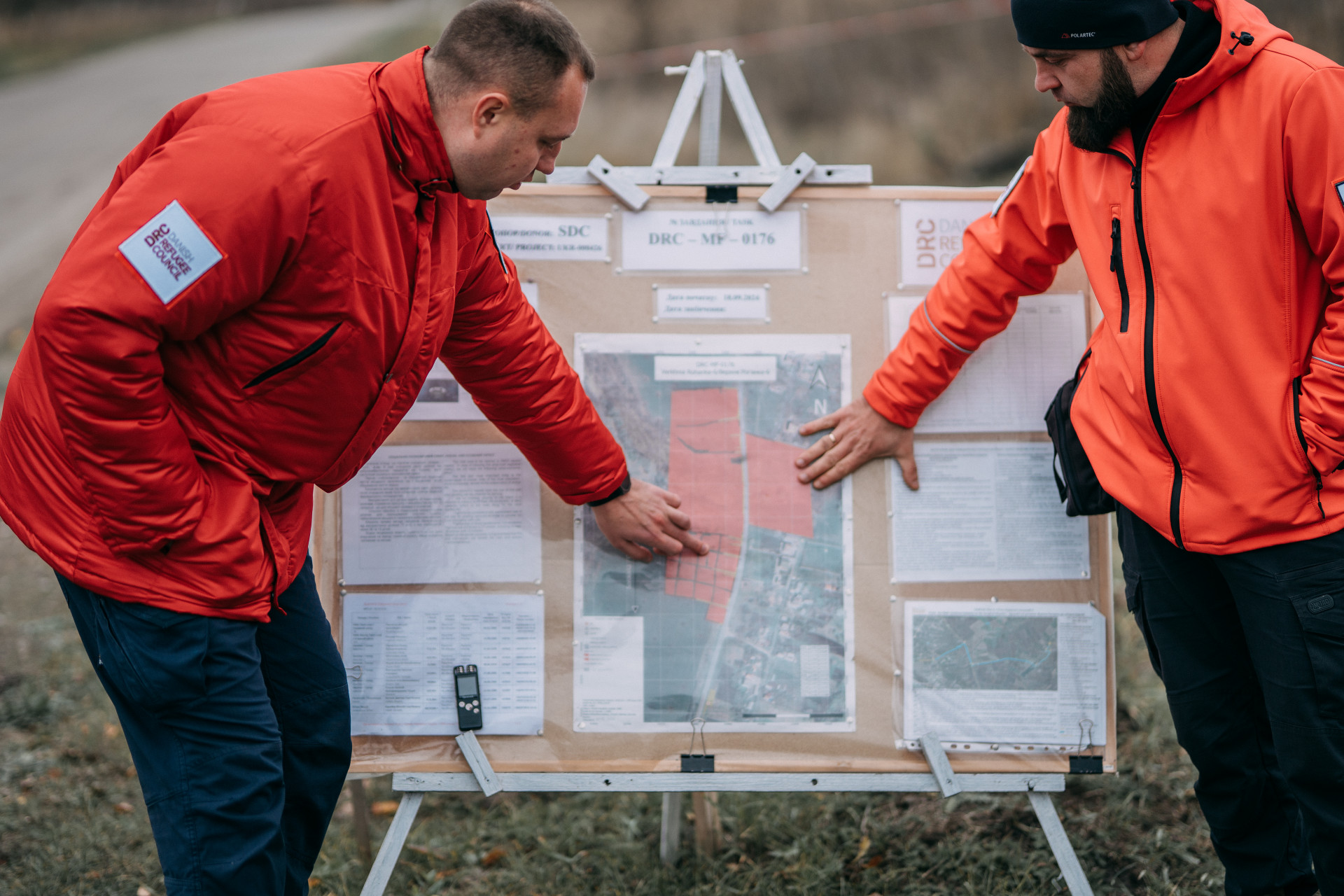
Anna and her colleagues work for the Danish Refugee Council — an organization involved, among other things, in humanitarian mine action in Ukraine. One of those supporting and funding this work is Switzerland. The country has allocated one million Swiss francs (about UAH 5.2 billion) for the demining of civilian and agricultural areas in Ukraine for the period from 2024 to 2027.

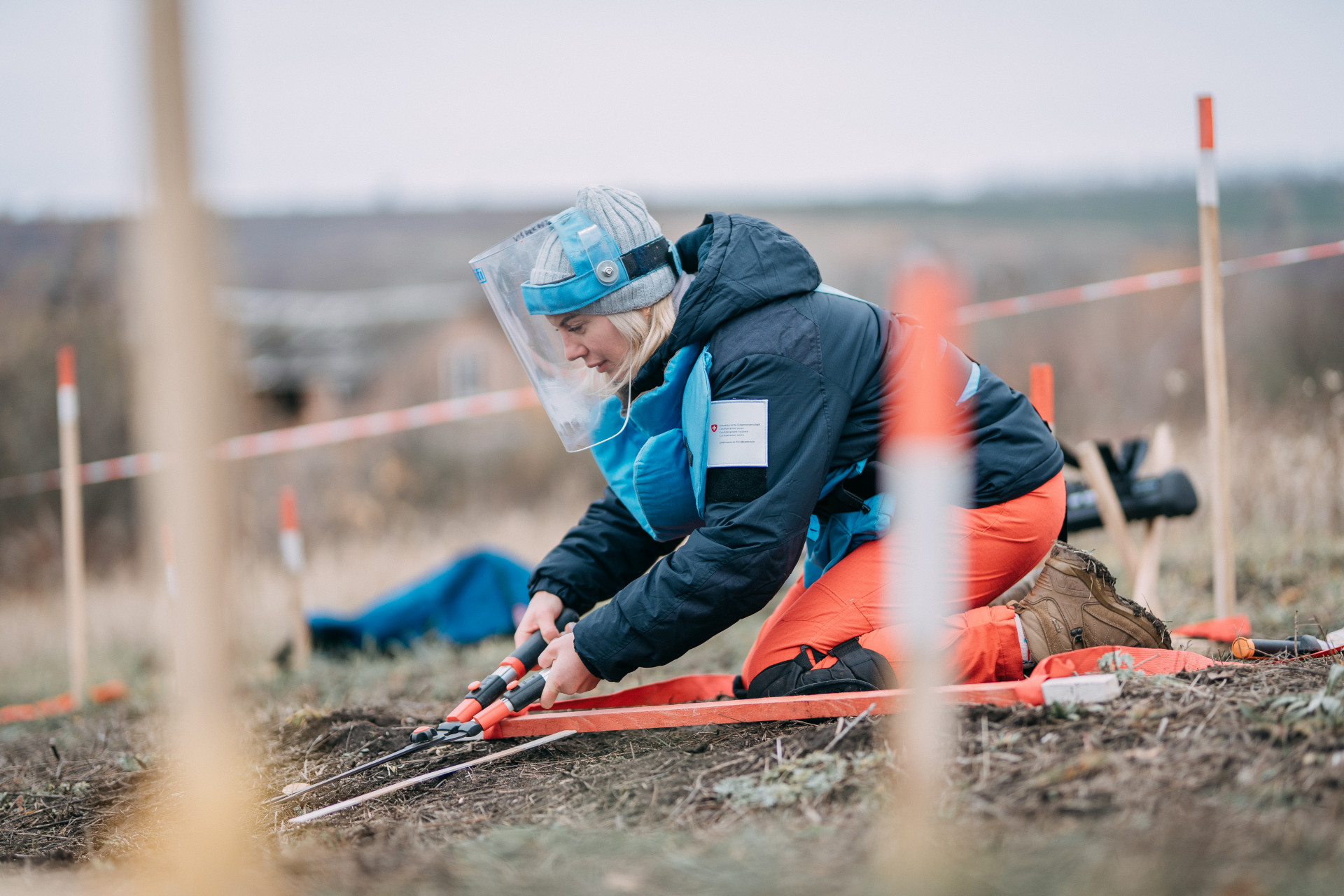
So far, the team has cleared 3,588 square meters of this Kharkiv-region field, working with the OMOL method — One Man, One Line. It is long and painstaking work.
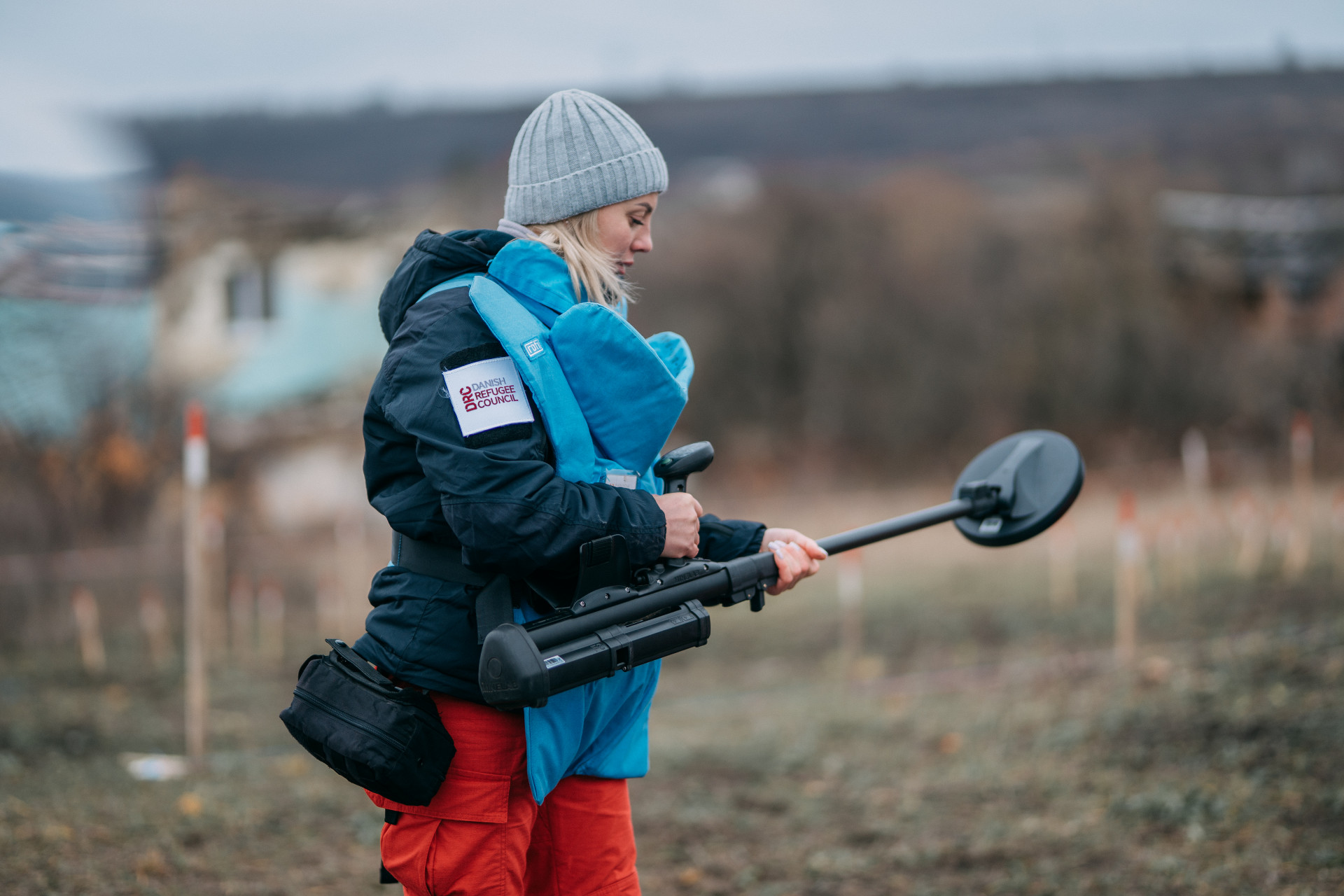
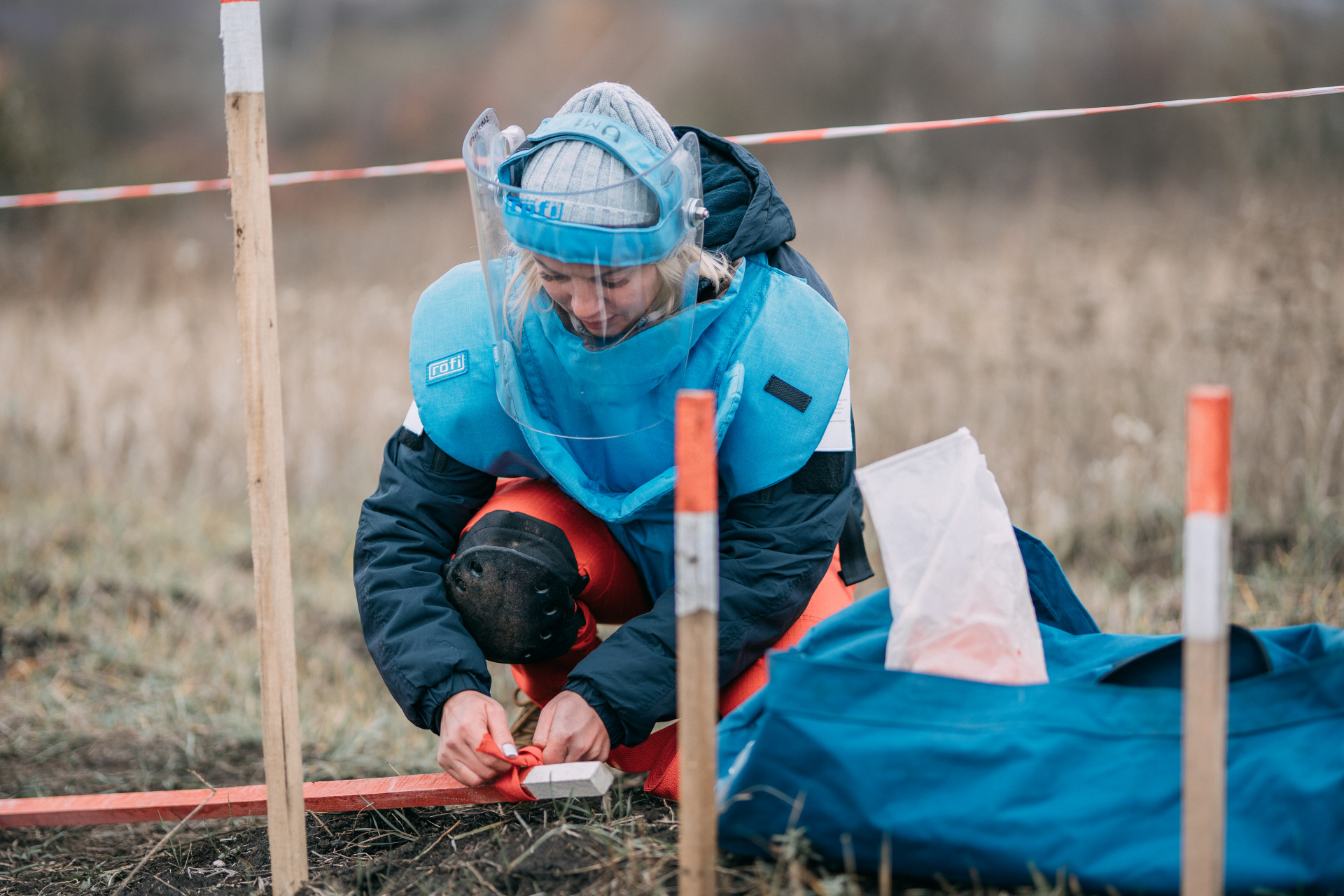
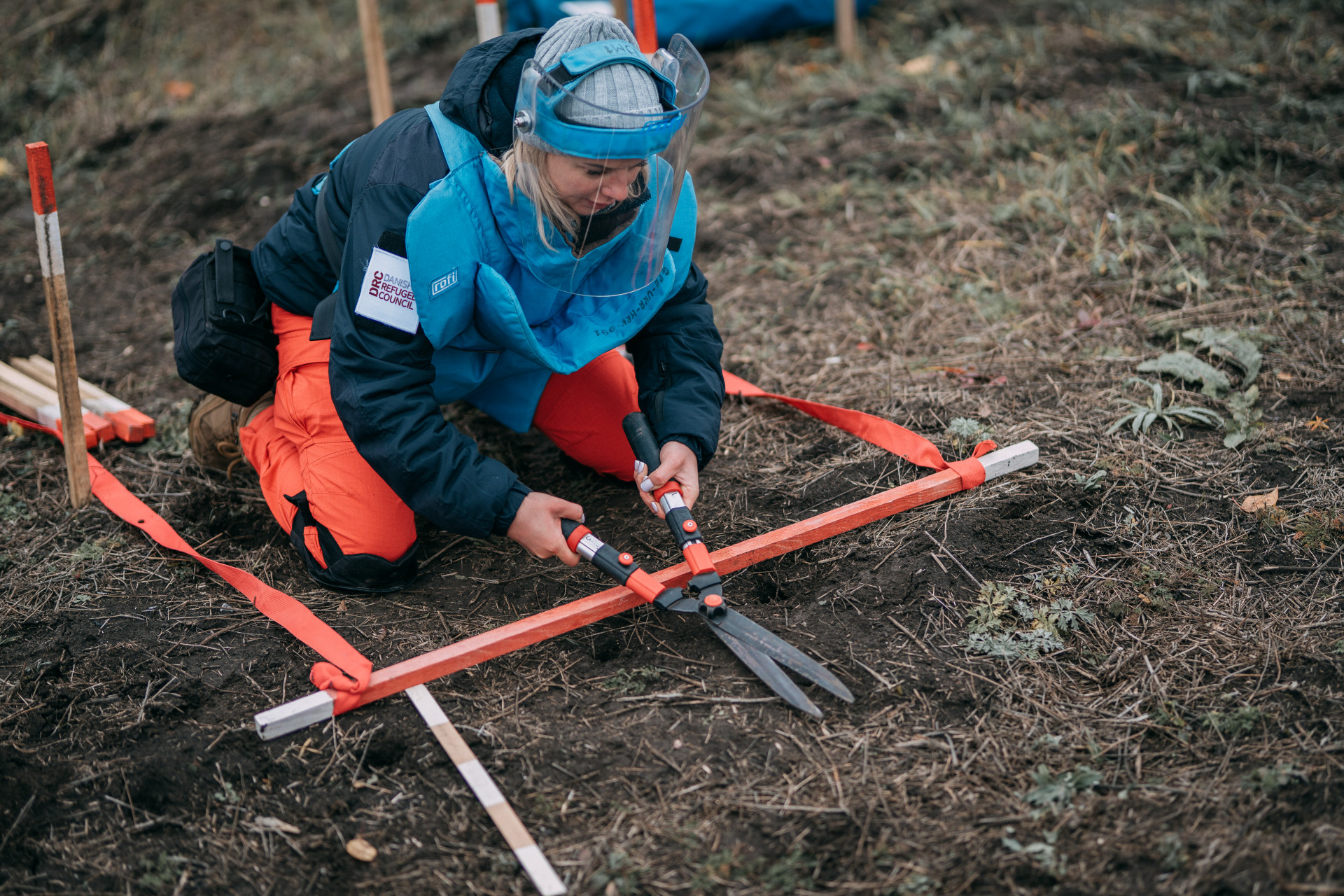
Anna approaches her starting point — before her lies a long strip of land about a meter wide. First, she carefully inspects the area ahead of her. Then, using a special metal probe — a “feeler” — she repeatedly moves it upward from the ground in a precise motion to check for tripwires. After that, Anna trims the grass with large shears and only then thoroughly sweeps the area with a metal detector. Every signal is marked with special signs and checked. Anna and the other deminers dig small side pits with tiny shovels to safely approach a potentially dangerous object and begin excavation.

“There were many shellings here, and the entire field is littered with small fragments from various types of weapons. However, we cannot ignore any signal, as PMN-2 mines have already been found here, and they contain only 25–32 grams of metal. That’s very little, so even the weakest signal could be a mine,” Anna explains.
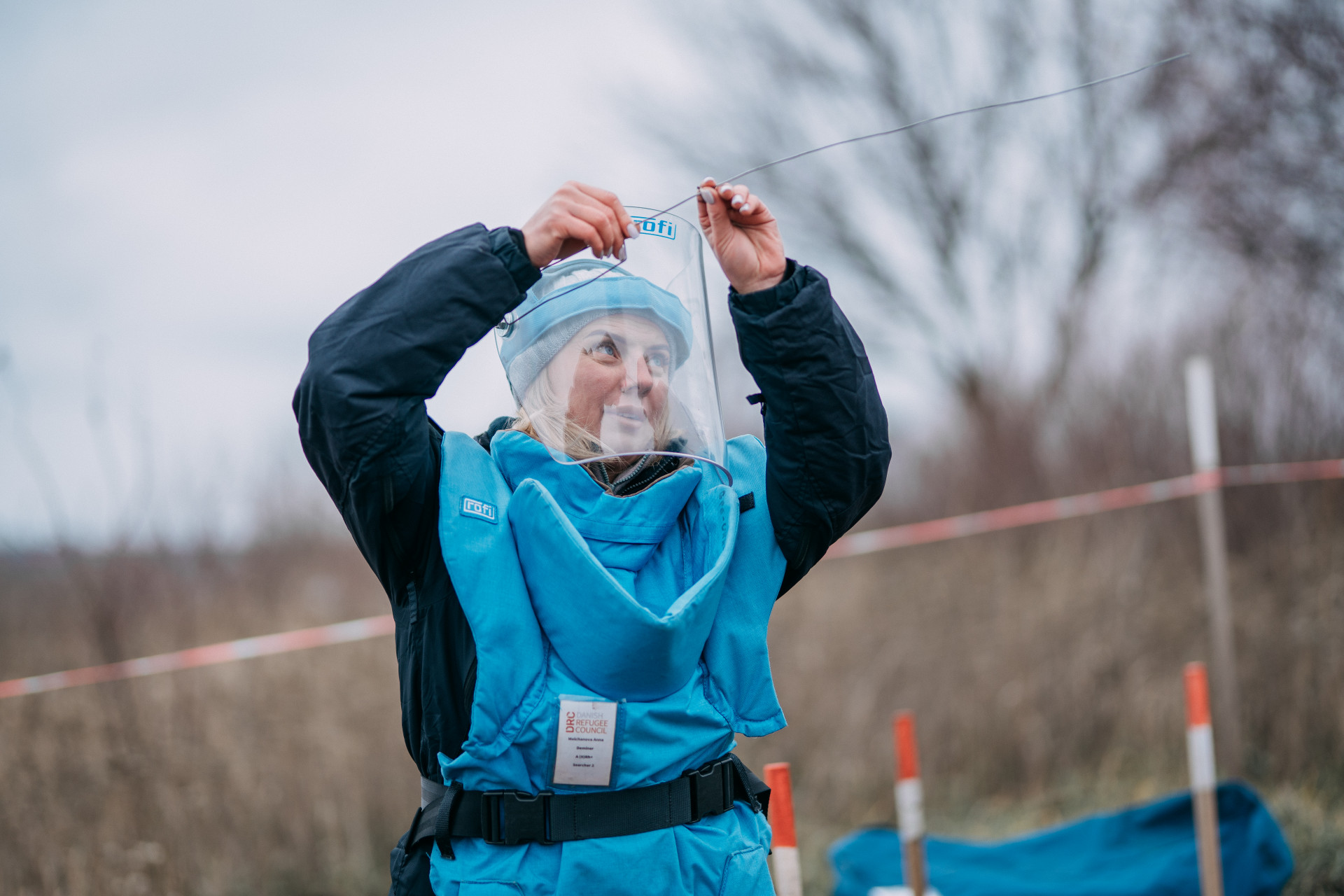
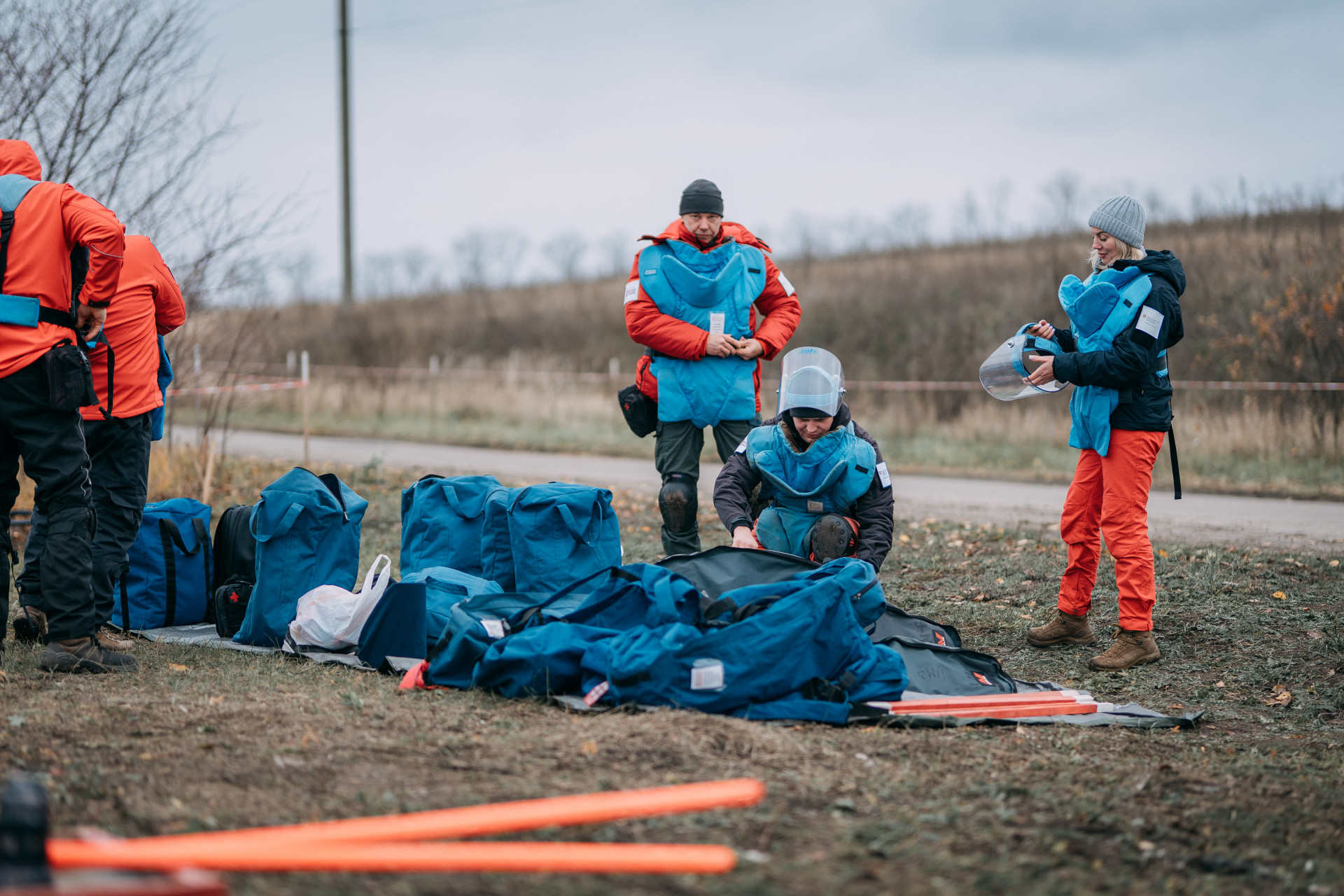
All of this is done in heavy Kevlar vests and large protective visors. Metal detectors react to any metal — a button, a nail, or a mine. In the near future, teams are expecting to switch to Minehound ground-penetrating radars, which can detect not only metal but also identify voids and anomalies in the soil that may indicate danger. These devices can significantly speed up clearance operations.

With Switzerland’s funding, demining operations, training of Ukrainian humanitarian deminers, provision of equipment, and research into innovative solutions are being carried out. Other key areas of support include assisting the Ukrainian government, monitoring, training, providing aid to victims, and conducting risk-education programs related to mines and explosive remnants of war.

In addition to the Danish Refugee Council, Switzerland funds other organizations engaged in humanitarian demining in Ukraine — the Swiss Foundation for Mine Action (FSD), the Geneva International Centre for Humanitarian Demining (GICHD), the World Food Programme (WFP), the Food and Agriculture Organization of the UN (FAO), the Mine Advisory Group (MAG) Humanity & Inclusion (HI), and APOPO. Their work is primarily focused on demining Kharkiv and Kherson regions.
I would like to express my immense gratitude to the Swiss people who support Ukraine, especially in humanitarian demining, Anna says. Thanks to them, we can work and clear our home country. It’s also about socio-economic impact — land always means jobs, mobility. But first and foremost, it means saving human lives.
Anna admits she is fascinated by her new profession and tries not to dwell on its dangers.

“A good deminer is, above all, someone responsible,” she says. “If a person is scared and cannot control their emotions, it becomes a risk for the entire team. Everyone experiences fear. But when you do everything correctly, the risks are minimized.”

With a smile, Anna recalls Hollywood movies that shaped many people’s expectations about what deminers do.

“Red wire or blue wire — which one to cut, remember? In reality, we follow rigorous procedures and cannot violate safety rules.”

One clear example of the focus on safety is the constant presence of a medical vehicle near the site. It is parked at a specific distance — far enough to avoid a blast, yet close enough to respond immediately if needed.

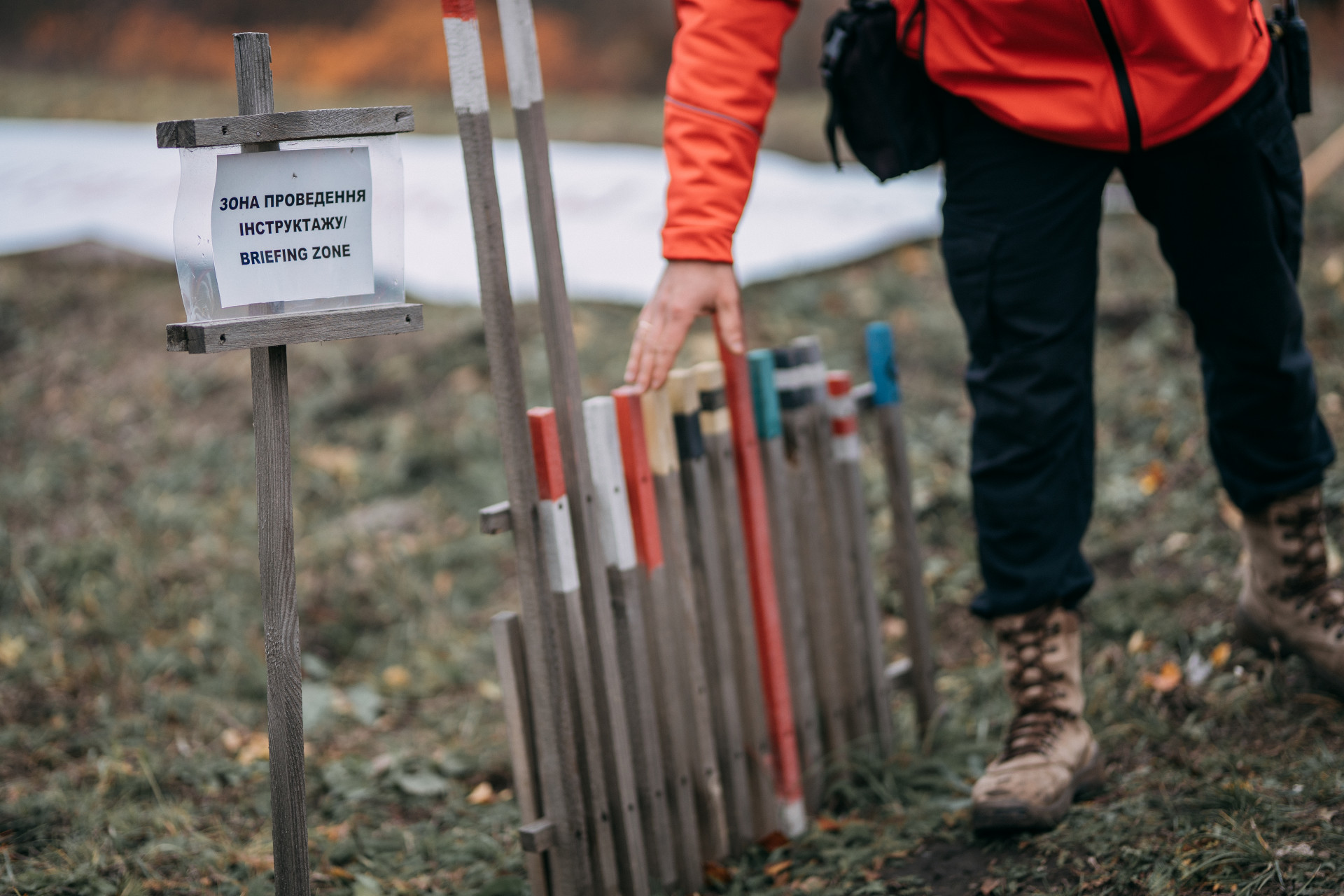
The minefield itself is marked with special wooden stakes of different sizes and colors. After the briefing, these markers suddenly become clear messages: don’t step here, this path is safe.

Anna has already served in Kyiv and Chernihiv regions, and now she is clearing Kharkiv region. Anything to make her native land safe again and bring life back to Ukraine’s fields.
Partnerships for the goals / 17
Life on land / 15
Reduced inequalities / 10
No poverty / 1
Good Health and well-being / 3
Sustainable сities and communities / 11