swiss logo photo
[ Health ]
06 / 07 / 2026

Building Independent Lives: A Swiss-Supported Home for People with Disabilities

-
By -
Building Independent Lives: A Swiss-Supported Home for People with Disabilities
"Oselya Rodyny" (Family Home), run by the NGO "Rodyna for People with Disabilities", is a supported living home in Fastiv, Kyiv region. Here, adults with intellectual and mental disabilities live together and manage their own daily routines. Backed by Switzerland and the Swiss-Ukrainian project "Mental Health for Ukraine" (MH4U), this facility has become a real bridge to the outside world for those who were previously completely cut off from society.
 
"The main value of our home is that we prepare people for a more independent life. We do not just look after them; we give them hands-on experience, the right to choose, and the chance to stand on their own two feet when making decisions," says Vita Yermolina, the coordinator of "Oselya Rodyny".

The home opened its doors in October 2024, and since then, it has been an example of a new, more humane approach to people with disabilities.
From Isolation to Their First Independent Choice
In Ukraine, residential care homes are almost the only places where people with disabilities that cannot count on family care or similar support can live. In these institutions, people have limited control over their own lives, and little chance to be part of the local community or act as active citizens. As a result, people with disabilities never get the chance to discover their own strengths or realise what they are truly capable of.

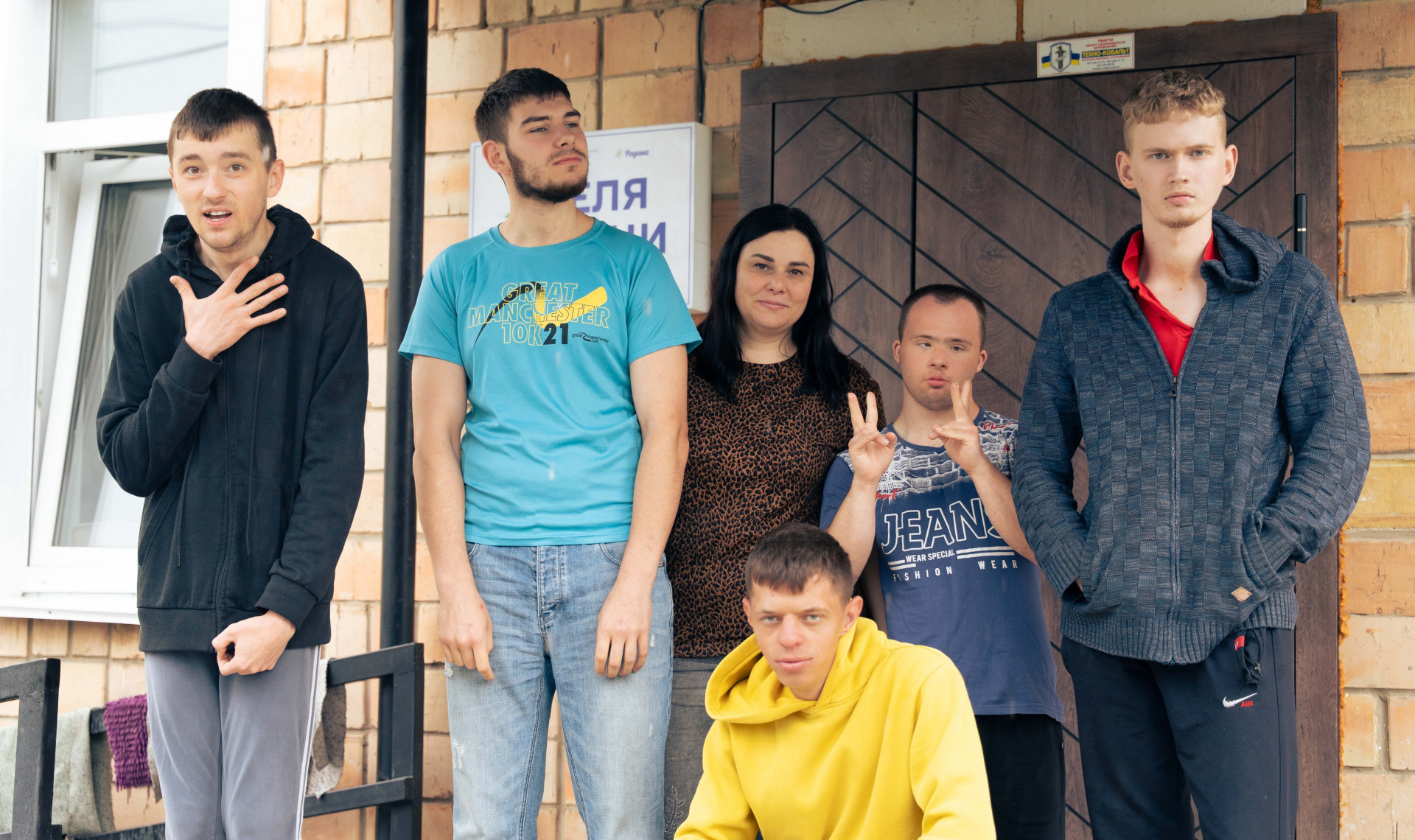
"Oselya Rodyny" in Fastiv was set up to break the mould. The living conditions here are as close to a real home as possible. When the first residents arrived, absolutely everything was brand new to many of them, and even a bit daunting. There were young men who, up until that point, had never once stepped foot outside their care home. Now, the residents of "Oselya Rodyny" run their own households, earn a living, have fun, and, at the end of the day, just live their lives. Social workers live on-site full-time to lend a helping hand and offer support.
"‘Residents’ is what we call our boys," Vita Yermolina explains. "The word ‘clients’ feels a bit too cold, and ‘service users’ sounds completely soulless. So we went with ‘residents’ because it respects their human dignity and highlights that this house is their actual home."
When Saying Goodbye is a Success Story
At the house, the young men learn basic life and social skills: cooking, doing the laundry, cleaning, and planning their day. The residents learn how to visit various organisations on their own, sort out paperwork, use public transport, chat with people, and handle everyday issues. In other words, they get a taste of real life and the chance to be much more independent.

"We are incredibly grateful to Switzerland and the MH4U project for funding and supporting our home. They help cover our needs and pay for our residents' stay at the house: groceries, toiletries, utility bills, and the social workers' wages. On top of that, it was with Swiss support that the building was completely refurbished and fully equipped with appliances, furniture, and household essentials. This kind of help gives these people a unique opportunity to live a full, dignified life in the community. Without their help, none of this would exist," the coordinator admits. 
With Switzerland's backing, the MH4U project has been supporting civil society organisations and municipal social service providers since 2022 in developing alternative supported living services within communities.
During this time, 45 people have been given the chance to live in supported housing and will never have to go back to life in an institution.

Up until recently, eight people lived full-time in the Fastiv house. Now, there are seven for the time being. This brings us to the story about 29-year-old Taras. After all, one of the main goals of supported living is not just to give residents a comfortable environment, but to help them become part of the community.

Taras has no parents. He only spent a year at the house, but during that time, things got serious between him and a girl he knew from the nearby town of Bila Tserkva. Eventually, they decided to start a family together.

"When Taras came over for his last overnight stay, he bought some sweets and gathered both the staff and the residents around the table," the coordinator of Oselya Rodyny recalls. "He thanked everyone for accepting him, understanding him, and having his back. It was so mature and incredibly touching. To be honest, pretty much everyone was in tears. Taras has been living independently for a month now, but he still keeps in touch with other residents." 
Lessons in Democracy in the Kitchen
The settling-in process at the house is different for everyone. Vita Yermolina notes that some get used to their new surroundings and come out of their shell in just a matter of weeks. Others need several months just to start trusting the people around them.

Some of the young men, like current resident Mykola, managed to find information about the house and reached out to the management themselves. The coordinator also recalls the story of a resident who was evacuated from the occupied territories. He arrived at the house completely withdrawn, expecting trouble from everyone. It took over three months of gentle, day-to-day work from psychologists and support workers before he finally built warm relationships with the others.
default image alt text

The residents and the staff love spending time together.

default image alt text

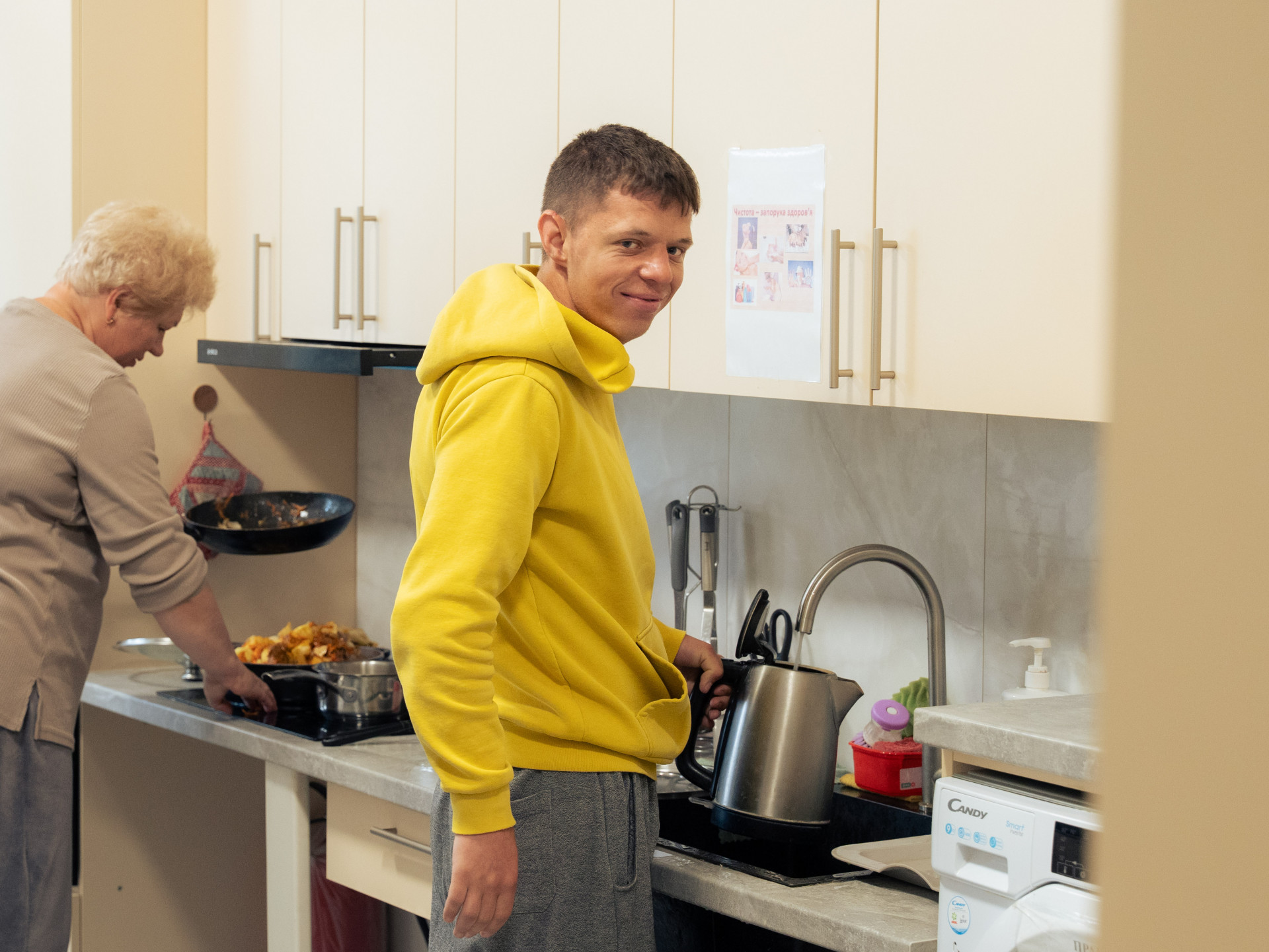
One of the residents is cooking lunch for everyone — it's his turn on the rota today.

Daily life at "Oselya Rodyny" is run on a self-governing basis. At first, the management tried to introduce a standard cleaning rota. However, domestic squabbles flared up: some complained about the standard of cleaning, whilst others flat-out refused to wash up after everyone else. So, the residents opted for complete autonomy, and everyone cooked strictly for themselves.

"They lasted a fortnight," Vita Yermolina smiles. "Then they got together, talked it all through, and decided: right, let's go back to the rota. It was their own choice. Now there's a rota on the wall, the residents keep an eye on it, and tick things off every evening. Today, for instance, we’re having liver with apples for lunch."
 
If the young man on duty has a change of plans, needs to pop out somewhere, or is feeling a bit under the weather, he has to sort out cover with one of the other residents himself, which represents a real-life model of a grown-up social contract.

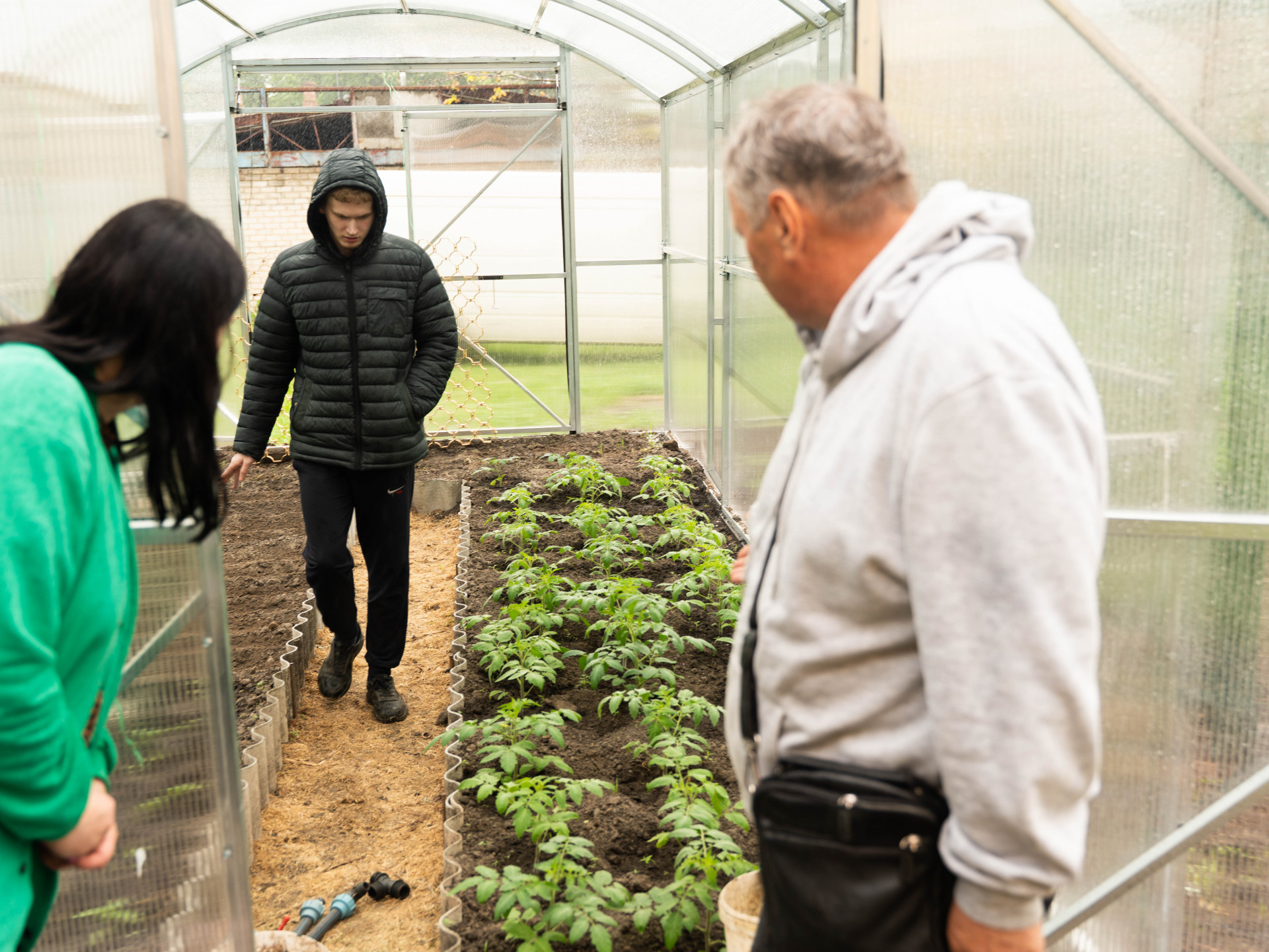
Recently, a new space for personal growth and work popped up next to the house—a large, state-of-the-art greenhouse, funded by a grant. Since this was completely uncharted territory for them, the management brought in a professional greenhouse expert. The specialist works with the residents every day, showing them the basis of agronomy. Now, tomatoes, peppers, and other vegetables are already growing nicely in the greenhouse.
Their First-Ever Wage
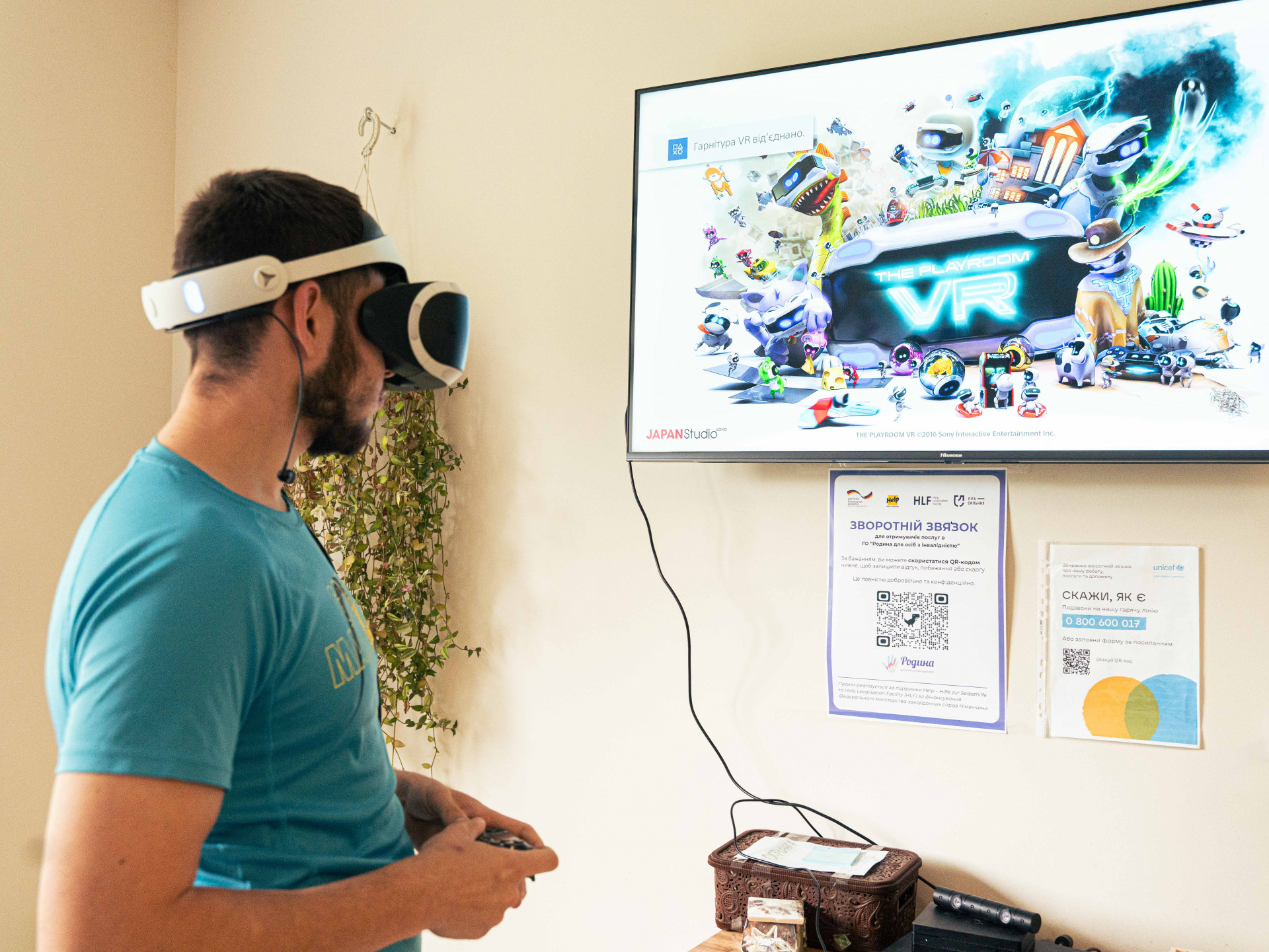
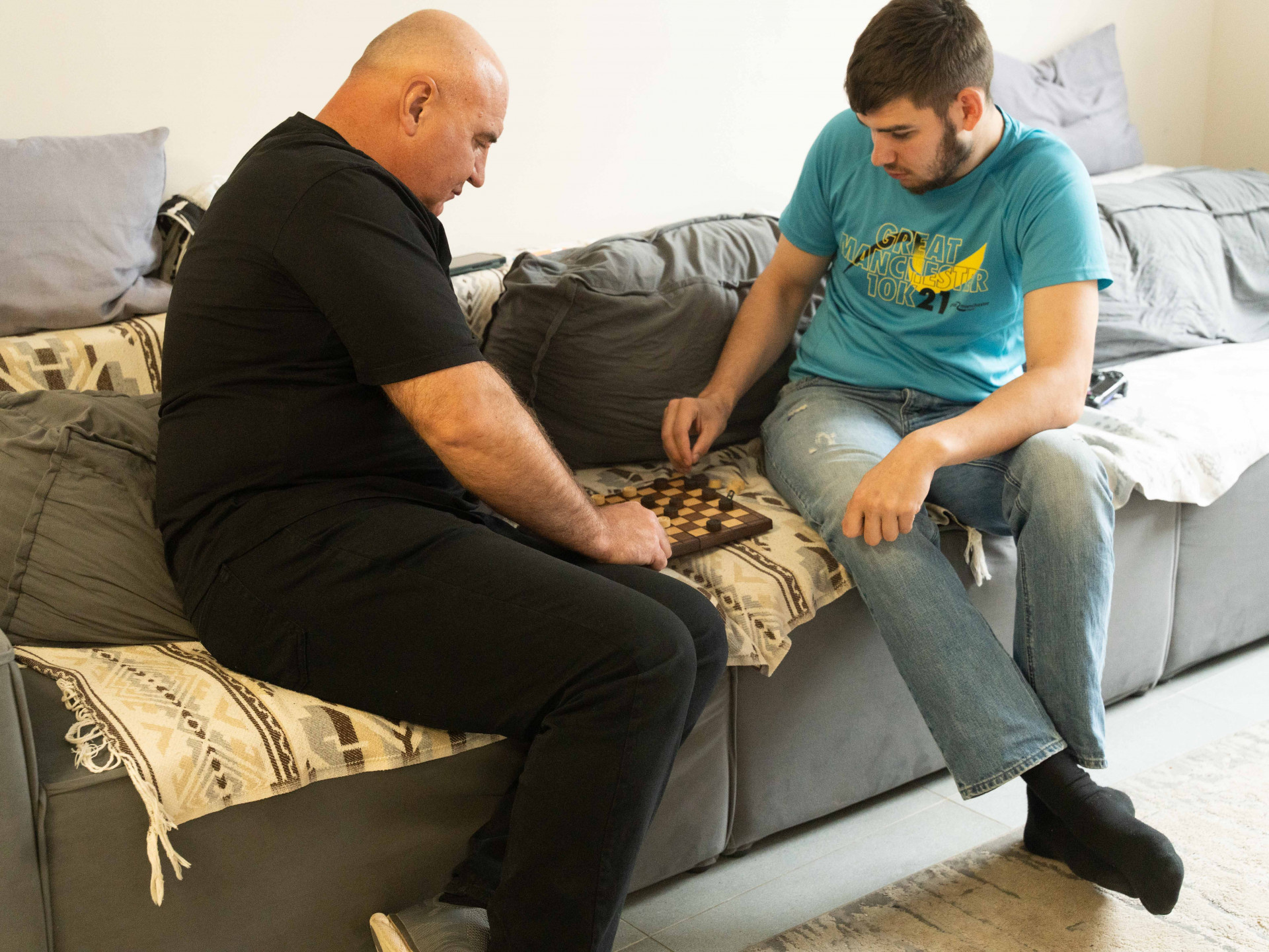
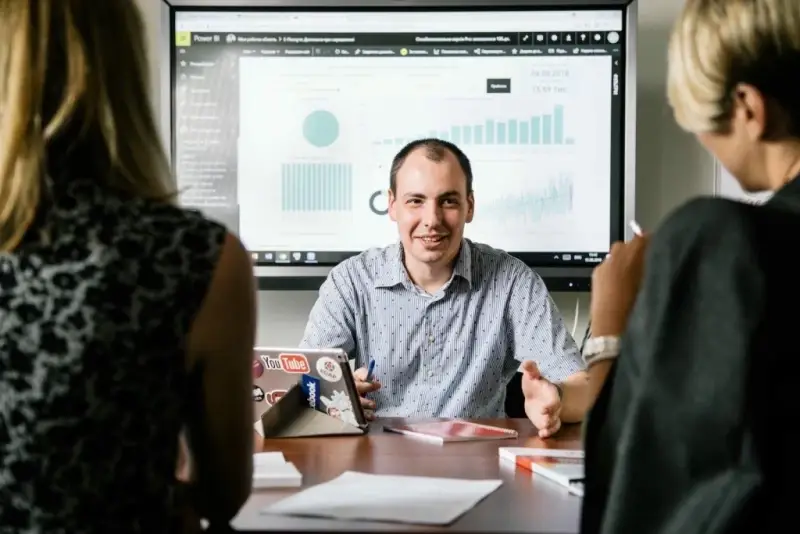
A typical day at "Oselya Rodyny" is filled with different activities. The resident on duty spends some time in the kitchen. The rest are dealing with their own things around the house: drawing, playing chess or on the games console, or heading into town for a walk. But almost every day, they also have special classes.

The residents regularly work with specialists: a psychologist, a physiotherapist to help with physical health and coordination, and a specialist who teaches a course called "The Right to Love", which covers sex education and relationships.

At first, these sessions caused a bit of awkwardness and giggles. Now, however, they look forward to these sessions and ask many additional questions. The knowledge they’re picking up is already coming in handy: besides Taras, who was mentioned earlier, another resident is seeing a girl in Fastiv. They're always on the phone with each other, setting up dates, and going for walks around town.

Naturally, life in a close-knit all-male household, with seven residents of different ages living under one roof, is not without its fair share of friction. However, there have only been three arguments since the house was opened. The young men are learning to live together: they argue sometimes, but quickly make up and find a common solution.  
Genuine friendships are being forged here, too.
For instance, residents Roma and Serhiy, who share a room, have become best friends and spend all their free time together. A similar bond connects two students, Sasha and Kolya: they have shared interests, play on the console together, and take trips to the capital to visit a gaming lounge.

Two of the residents are doing their studies. One of them is studying part-time to become an agronomist at the National University of Life and Environmental Sciences. The second one came to "Oselya Rodyny" from a care home with only five years of basic schooling: no one wanted him to study. Since moving into the supported living home, he has finished evening school and successfully enrolled in a local college to train as a cook and waiter. The coordinator proudly tells how at parent-teacher meetings, teachers praise him for his diligence and success.

Local employers still hold quite a few prejudices and are not always keen to take on people with disabilities. In spite of this, "Oselya Rodyny" already has an inspiring success story. A while back, the residents from the house worked officially for several months at the "Kozak" garment factory. They got their very first employment record books and earned their first salaries.
default image alt text

A resident in his room with the paintings he did himself.

default image alt text

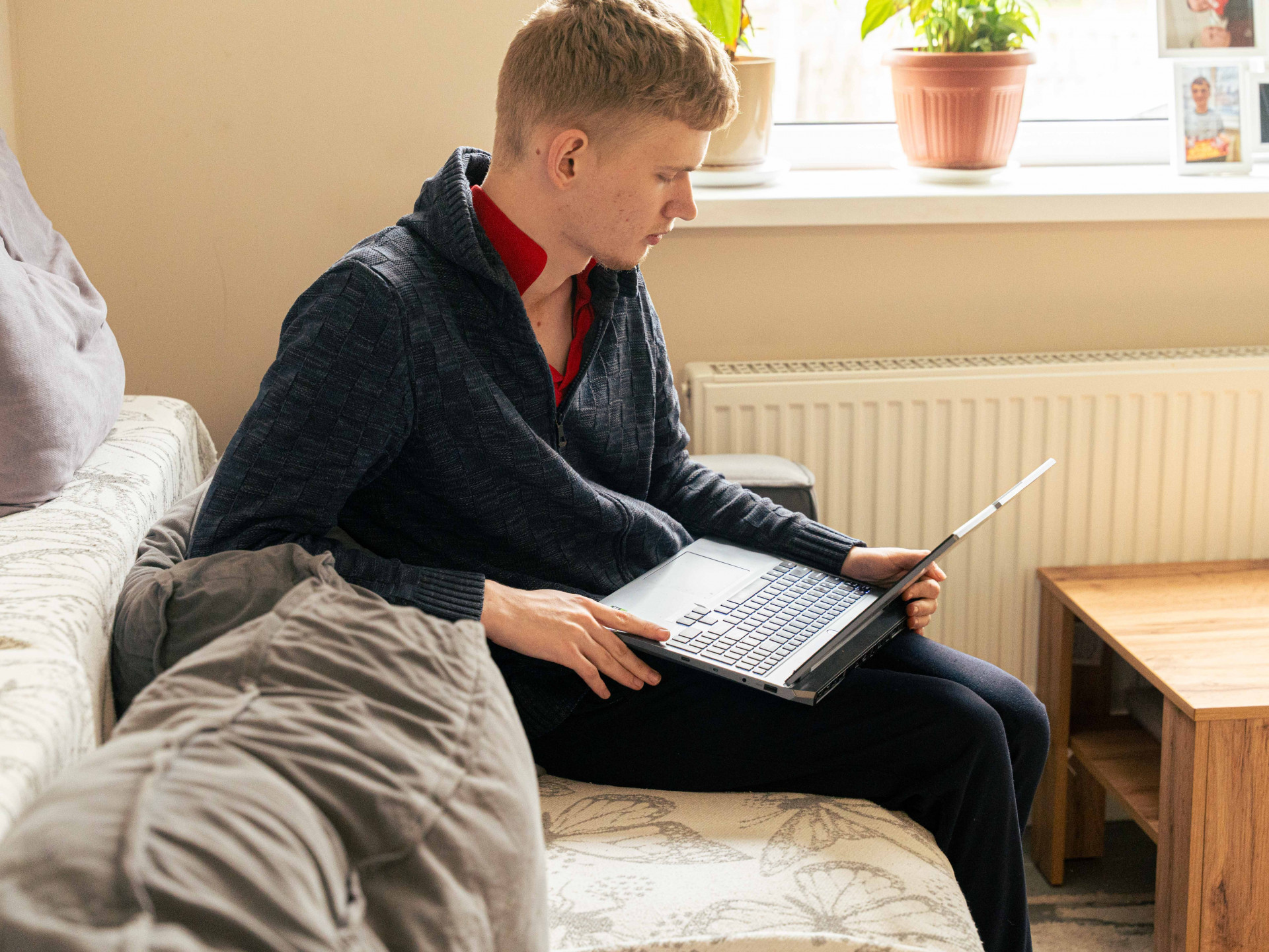
A resident with his own laptop.

 "At first, some of the residents did not really grasp the value of money because they had never actually held it in their hands. When they got their first wages, they came up to me and asked, ‘Vita, what should we do with this? Can we buy some headphones?’ I told them, ‘Of course, you earned it, so you can spend it however you like.’" 

 The contract with the factory has now expired, but meetings have already been scheduled with its management to agree on continued cooperation. 
"The young men are incredibly keen to work. They really want to be useful and make independent decisions," sums up Vita Yermolina.
The experience of this supported living home proves that everyone, regardless of their background or diagnosis, has the right to dignity, personal growth, and freedom of choice. Through the joint efforts of Ukrainian professionals and Swiss partners, "Oselya Rodyny" shows every day that becoming part of the community is possible, and that former care home residents have what it takes to become successful students, hard-working employees, and just happy people making their own way in the world.
Good Health and well-being / 3